Benefits of Merino Wool Socks: Foot Health Guide

Last Updated: November 16, 2026
Quick Summary
Merino wool socks move sweat away from your skin and release it as vapor, so your feet stay drier than in cotton, which holds liquid against the skin. The crimped fiber also traps air for insulation, resists odor, and keeps insulating even when damp. Merino helps manage moisture but does not stop excessive sweating.
Merino dries faster than cotton but slower than a thin synthetic sock.
Merino-nylon blends add abrasion resistance at the heel and toe.
Check feet daily, including between the toes, if you have diabetes.
Wash cool with mild detergent and avoid bleach, fabric softener, and high dryer heat.
Replace socks when cushioning flattens or holes appear.
Are your socks helping or hurting your feet?
We bring licensed in-home foot care to seniors and people with diabetes across Peel and the GTA.
Table of Contents
How Merino Wool Fibers Manage Moisture and Sweat
Merino wool socks work because the fiber itself moves sweat away from your skin. Each merino fiber has a crimped, scaly structure that traps air and wicks moisture to the surface, where it evaporates instead of sitting against your foot.
That matters more than most people realize. A damp foot softens the skin, and softened skin tears and blisters more easily. Merino's structure also lets the fiber absorb moisture vapor without feeling wet, which is why a merino sock can feel dry even after a long day.
Poor moisture management can lead to macerated skin between the toes, fungal growth in warm creases, and irritation that often clears up once the feet stay dry.
Merino is not magic. It is simply a fiber whose structure matches what feet need.
Merino Wool Socks for Sweaty Feet: Staying Dry All Day
For sweaty feet, the fiber's job is to move moisture off the skin and let it evaporate, and merino does that better than cotton because wool wicks and releases vapor while cotton holds liquid against the skin.
Here is how the common sock fibers actually differ for a sweaty foot:
Cotton absorbs sweat readily but releases it slowly, so it stays damp and heavy. It dries slowest of the three and offers little insulation once wet.
Synthetics (polyester, nylon, acrylic) wick moisture quickly and dry fast, often faster than merino. They are durable and inexpensive, but many knits hold odor because bacteria colonize the fiber surface, and they offer little warmth when damp.
Merino wool absorbs moisture vapor into the fiber, feels dry against skin, resists odor naturally, and keeps insulating when damp. It dries slower than a thin synthetic but faster than cotton.
Blends are the most common real-world option. A merino-nylon blend adds abrasion resistance at the heel and toe; a merino-polyester blend speeds drying. Most performance socks are blends for this reason.
The practical difference shows up in small ways:
Merino pulls sweat to the outer surface, so the skin side stays drier
Wool fibers resist odor because bacteria have less damp environment to colonize
Merino dries faster than cotton after washing or after a wet walk, though a thin synthetic may dry faster still
The fiber breathes, which can help reduce heat buildup inside enclosed shoes
If sweat is your main problem, fabric choice matters more than thickness. Readers who want a deeper comparison of fabrics and fits can read our guide to dry feet socks and which materials actually help.
Merino socks can cost more per pair than basic cotton or synthetic socks, and the fiber is less abrasion-resistant than nylon, so high-wear zones often benefit from reinforcement or a blend.
Watch out: merino helps manage moisture, but it does not stop excessive sweating. If your feet soak through socks within hours regardless of fabric, that is worth raising with a health professional.
Temperature Regulation and Insulation in Warm and Cold Conditions
Merino wool socks can help regulate temperature in both directions, which is why many people wear them in multiple seasons. The crimped fiber traps air for insulation in cold weather, and the same structure releases excess heat and moisture in summer.
This dual behavior is unusual. Synthetic fibers tend to be either warm or cool. Cotton is cool until it gets wet, then it becomes cold and heavy. Merino adapts.
In cold weather, merino keeps insulating even when damp, which matters for anyone walking outdoors in wet conditions. In summer heat, the breathability and moisture-wicking keep the foot from overheating inside a shoe.
For people with circulation problems, keeping feet warm and dry can matter beyond comfort, since cold, damp conditions are generally associated with skin breakdown.
Merino Wool Socks for Diabetes: What to Know About Foot Care
Merino wool socks can be a reasonable choice for people with diabetes, but they are one part of foot care, not a substitute for it. The fiber's moisture management and softness reduce friction and keep skin drier, which lowers irritation risk.
Diabetes can change foot care needs. Reduced sensation can mean a small blister or hot spot goes unnoticed until it becomes an ulcer, and poor circulation can slow healing.
The Diabetes Canada foot care resources recommend inspecting feet daily, checking inside shoes before putting them on, and never walking barefoot. Well-fitting merino socks support those habits: seamless toes reduce pressure points, and moisture control keeps skin intact.
Check feet daily, including between the toes
Inspect socks and shoes for seams, grit, or worn patches
Choose socks with no tight elastic band
Change socks daily, or sooner if damp
Book a professional foot assessment at least annually
For readers who want to understand how regular assessments fit into a care routine, our article on the importance of regular foot assessments for diabetics explains what a proper check involves.
Socks to Prevent Blisters: Friction, Cushioning, and Fit
Blisters come from friction, and friction comes from three things: moisture, heat, and movement. Merino wool socks address all three. The fiber wicks moisture, breathes to reduce heat, and its natural crimp provides cushioning that absorbs impact and reduces shear against the skin.
Fit is the piece most people get wrong. A sock that bunches, slides, or wrinkles creates the exact friction that causes hot spots. The right merino sock sits smooth against the foot with no excess fabric at the heel or toes.
Cushioning placement matters too. Reinforced heel and toe zones protect the areas that take the most pressure. For walking and hiking, a mid-weight merino sock with targeted cushioning usually beats a thick uniform sock.
Watch out: if you already have a blister or broken skin, do not simply cover it and carry on. Before blaming your merino socks, it is worth checking whether your current socks are causing irritation in the first place, which our guide on whether your socks are causing foot irritation walks through.
Best Socks for Sensitive Feet: Softness, Seams, and Pressure Points
The best socks for sensitive feet are soft, seam-free at the toe, and free of tight elastic. Merino's fine fibers feel smooth against skin rather than scratchy, and flat or hand-linked toe seams remove the ridge that presses on toes.

Sensitive feet react to three things: rough fiber, raised seams, and pressure. Merino handles the first. Construction handles the other two.
Look for these features:
Seam-free or flat-linked toes to remove the ridge over the toes
Graduated, non-binding cuffs that stay up without digging in
Cushioned soles at the heel and ball of the foot
Correct size with no excess fabric to wrinkle
Pressure points deserve attention beyond the sock. Corns, calluses, and thickened nails change how a sock and shoe fit together. For a deeper guide on choosing socks for sensitive skin, see our article on socks for sensitive skin.
Odor Resistance, Care, and How Long Merino Socks Last
Merino is often described as resisting odor because wool fibers absorb moisture and can create a less hospitable environment for odor-causing bacteria, which is one reason merino socks may be worn more than once between washes (Wool is naturally odour resistant).
Care is simple but specific, and the details matter more for wool than for cotton:
Machine wash cool on a gentle cycle, or hand wash
Use a mild detergent, not bleach or fabric softener, because softener coats the fiber and reduces wicking
Avoid high heat in the dryer; air dry or tumble low, since heat and agitation cause wool to shrink and felt
Turn socks inside out to protect the fiber and clean the skin side
Wash after every one to two wears in normal use; rinse and air dry after a sweaty day if you plan to rewear
How long a pair lasts depends on the blend and where you wear it.
A few habits extend life without much effort. Rotate two or three pairs so each has time to dry fully between wears. Avoid pulling socks on by the cuff, which stretches the elastic. And treat stains promptly, because set-in stains and repeated hot washes break down fiber faster than normal wear.
Watch out: if a sock develops a hole at the toe or heel within a few wears, check the fit and your shoe interior for grit or a rough seam before blaming the fiber, since friction from a poor fit wears through wool quickly.
Choosing Merino Wool Socks for Your Foot Condition
Match the sock to the condition, not to the label. Merino helps across most foot health situations, but the weight, cushioning, and fit should change with what your feet actually need.
Foot Condition | Sock Priority | What to Look For |
Sweaty feet | Moisture management | Thin to mid-weight merino, breathable knit |
Diabetes | Protection and inspection | Seamless toe, non-binding cuff, light cushioning |
Sensitive skin | Softness and smooth seams | Fine-gauge merino, flat-linked toe, no elastic band |
Blister-prone | Friction and cushioning | Targeted heel and toe cushioning, snug fit |
Cold feet | Insulation | Mid to thick weight, wool blend for warmth |
Plantar fasciitis or heel spurs | Cushioning at the heel | Cushioned heel zone, supportive fit |
A few selection rules apply across the board. Buy the right size, because a sock that is too large wrinkles and a sock that is too small compresses. Check the toe seam before wearing. Wash new socks before the first long wear.
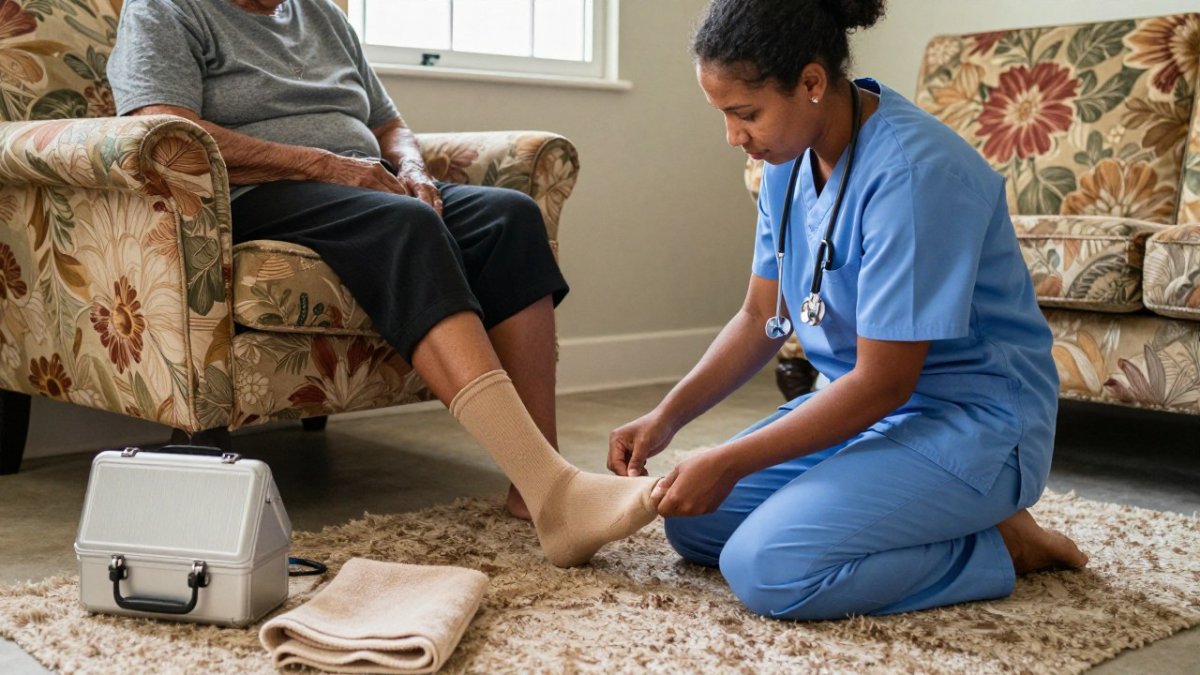
If you have a specific foot condition and want professional support alongside better socks, our team at Foot Care Nursing With Gellis provides in-home diabetic foot care for people who find travel to a clinic difficult.
Sock choice helps, but it cannot replace a proper foot assessment, especially if you live with diabetes, circulation problems, or reduced sensation.
Frequently Asked Questions
Are merino wool socks good for foot health?
Merino wool socks can support foot health in several practical ways. The fibers absorb moisture and move it away from skin, which helps keep feet dry and reduces the damp environment where bacteria and fungal growth thrive. Merino also cushions high-pressure areas and regulates temperature, so feet stay comfortable in both warm and cold conditions. For people with diabetes or sensitive skin, though, fit and seam construction matter as much as the fiber itself, so check with a foot care professional before changing your routine.
Can merino wool socks help prevent blisters?
They can reduce the conditions that cause blisters, but no sock prevents every blister. Merino wool socks to prevent blisters work by managing moisture and lowering friction against the skin, especially when paired with a well-fitted shoe. Cushioned heel and toe zones add impact protection on longer walks. Look for flat seams and a snug but not tight fit, since loose fabric bunching inside a shoe creates the hot spots that turn into blisters.
Are merino wool socks suitable for people with diabetes?
Merino wool socks for diabetes are a reasonable option because they keep feet dry and add cushioning, but they are not a treatment. Diabetic foot care depends on daily inspection, proper fit, and professional attention to nail and skin problems. Choose socks with no tight elastic band and smooth seams, and check feet each day for redness, swelling, or breaks in the skin. A licensed foot care specialist can advise on what suits your circulation and sensation.
How often should you change merino wool socks?
Change merino wool socks daily, and swap to a fresh pair after heavy sweating or long walks. Merino resists odor better than cotton because the fibers limit bacterial growth, but that does not replace washing. Turn socks inside out, wash in cool water on a gentle cycle, and air dry to protect the fiber structure. Rotating two or three pairs extends their lifespan and keeps cushioning and fit intact longer.

Comments