How Often to Change Socks During Work: 7 Rules That Work

Last Updated: November 20, 2026
Quick Summary
Change socks once a day at minimum, and twice a day if you sweat heavily or work on your feet. Heavy physical work or hot conditions may call for two to three pairs per shift, and you should change immediately after exercise or a sweaty commute.
Desk workers in a cool office can wear one clean pair per day.
Pack a spare pair the night before so you actually use it.
Dry your feet before putting on fresh socks, including between the toes.
People with diabetes should wear fresh socks every day and check feet daily.
In hot weather, plan an extra change and choose lighter, thinner socks.
Socks damp by midday? Your feet need a check.
In-home foot care from a licensed RPN, with specialized diabetic foot care and senior support.
Table of Contents
Why Your Workday Sock Change Matters More Than You Think
How often to change socks during work is a question most people answer by feel, and most people answer wrong. Damp socks left on for hours can soften skin, and softened skin splits and becomes more vulnerable to fungal problems. A sock change is a health habit, not a laundry detail. Your feet spend the whole shift inside a warm, dark, enclosed space. That is the exact environment where moisture builds and skin breaks down. Below, we break down the frequency rules, a workday schedule you can actually follow, and the warning signs that mean you should stop guessing and get your feet looked at.
How Often Should You Change Socks? The Frequency Rules
The short answer: change socks once a day at minimum, and twice a day if you sweat heavily or work on your feet. Anyone with diabetes or circulation problems should treat a fresh pair as a daily non-negotiable.
Here is the full frequency picture:
Desk work, cool office: one clean pair per day
Standing all day, moderate sweat: one pair in the morning, one at midday
Heavy physical work or hot conditions: two to three pairs per shift
After exercise or a sweaty commute: change immediately, do not wait
Weekends and days off: same rules apply, activity decides
The principle behind all of it is simple. Moisture is the enemy. A dry sock helps protect skin. A damp sock can soften it, and soft skin may tear and become more prone to fungus.
A Practical Workday Schedule for Changing Socks
Here is a schedule that fits a typical shift:
Morning: fresh pair on before you leave
Mid-shift: swap to a spare pair at your break, dry your feet first
After work: change out of work socks before your commute home or before exercise
Bedtime: never sleep in the socks you wore all day
Pack the spare pair the night before. A pair in your bag is a pair you will actually use.
Decision Rules Based on Sweat, Dampness, Odor, and Activity
If you do not want to count hours, these signs can help guide when to change.
Signal | What It Means | What to Do |
Socks feel damp to the touch | Moisture has built up | Change now, dry feet first |
Noticeable odor at midday | Bacteria are multiplying | Change and air your shoes |
Skin looks white and soft | Too much moisture | Change socks and footwear |
Itching or redness between toes | Possible fungal infection | Change daily and see a professional |
Heavy sweating or hot workplace | High moisture load | Carry two spare pairs |
Changing Socks During a Long Shift: What to Do at Work
Practical ways to change socks at work matter more than theory. A twelve-hour shift leaves no room for a full wardrobe change, so keep it small and repeatable.

Keep a small kit in your bag or locker: one spare pair of socks, a small towel, and a resealable bag for the used pair. At break, wash and dry your feet, put on the fresh pair, and bag the old ones. Watch out: changing socks without drying your feet first traps moisture against the skin and undoes the benefit. Dry between the toes, every time.
A few workplace realities are worth planning for. If your only option is a shared washroom, a pack of disposable wipes and a small towel let you clean and dry your feet without a full wash. If you wear safety footwear, loosen the laces and pull the boot off slowly so you do not drag a seam across the skin. Store the used pair in the resealable bag rather than loose in your bag, because a damp sock in a closed bag becomes a source of odor and bacteria by the end of the shift.
For long shifts, the second change is the one people skip. Build it into the same break you already take, so it becomes a habit rather than an extra task. If your workplace has a locker room with a hand dryer, use it on your feet only after toweling off, and keep the dryer at a distance so you do not overheat the skin.
Sweaty Feet at Work: How Moisture Changes the Rules
Sweaty feet at work shorten the clock on every other rule. When your feet sweat heavily, one pair of socks stops doing its job within a few hours, not at the end of the day. That is why frequency has to flex with sweat, not with the calendar.
The fix has two parts. First, change more often. Second, choose socks that move moisture away from skin instead of holding it there. Cotton feels soft but holds water against your foot. Wool blends and synthetic moisture-wicking fabrics dry faster. If damp feet are your daily reality, our guide to dry feet socks: which fabrics and fits actually help goes deeper on fabric and fit choices.
Diabetes Foot Care and Socks: Why Frequency Matters
Diabetes foot care and socks belong in the same sentence, because reduced sensation means you may not feel the damage happening. A damp sock rubbing against skin can create a blister or a small break that goes unnoticed. For someone with diabetes, a minor wound can become a serious problem.
General guidance for people living with diabetes is fresh socks every day, and a second pair on days with heavy sweating or long shifts. Check your feet daily for redness, swelling, or breaks in the skin (Appendix 13). If you cannot see the soles of your feet, use a mirror or ask someone to check for you. Any wound that is not healing deserves prompt professional attention. Guidance from Diabetes Canada is a reliable starting point for daily foot checks.
Sock Materials and Footwear for Long Shifts
Fabric choice decides how long a pair of socks stays effective. For long shifts, look for moisture-wicking blends, seamless toes, and a fit that stays put without pinching. Merino wool is a strong pick for temperature control across a long day, and our breakdown of the benefits of merino wool socks for foot health explains why. If you want a broader comparison before buying, see our list of the best sock materials for preventing cracked heels.
Footwear matters just as much. Rotate your work shoes so each pair dries fully between shifts. Tight shoes trap heat and press seams into skin. If you are weighing breathable options for boots, our article on whether breathable socks for work boots are worth it covers the trade-offs honestly.
Hot Weather, Cold Weather, and Boots: Adapting Your Sock Routine
Heat and cold change the math in opposite directions. In hot weather, sweat output climbs, so plan on an extra change and lighter, thinner socks. In winter, boots and heavy socks trap moisture with no escape, so a midday change matters just as much as it does in July.
Boot wearers need one extra habit: dry the boots. Stuff them with newspaper or use a boot dryer overnight. Never pull damp boots onto fresh socks, because the moisture transfers straight back to your feet.
When to Ask a Foot Care Professional About Your Feet
Some foot problems should not wait for a home remedy. Ask a professional if you notice any of these:
A wound, blister, or sore that is not healing
Redness, swelling, or warmth in one foot
Thickened, discolored, or crumbling nails
Persistent itching or peeling between the toes
Numbness or loss of feeling in your feet
Pain that changes how you walk
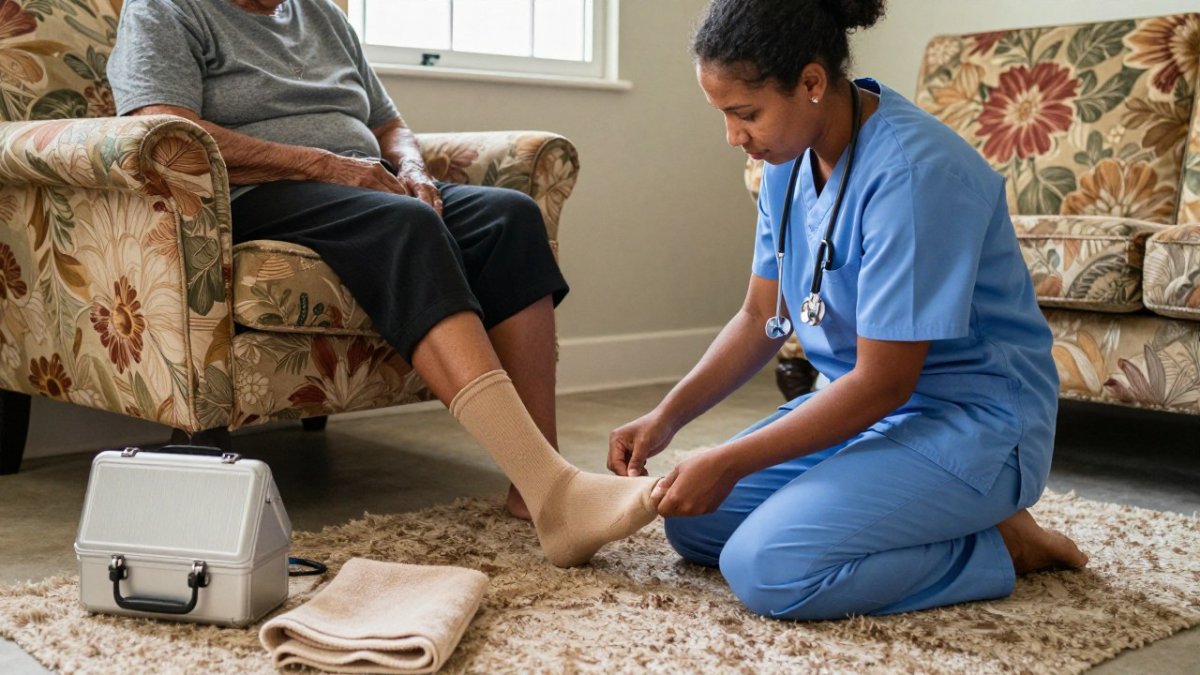
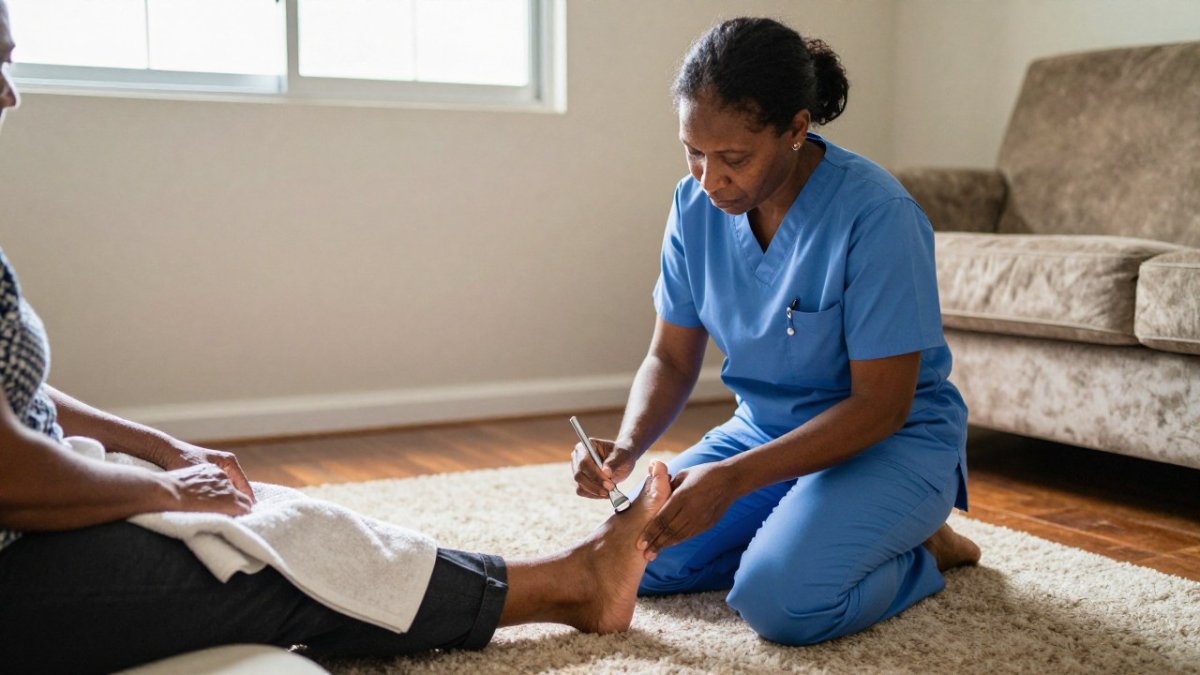
For readers managing diabetes or reduced mobility, professional support can come to you. You can learn more about professional diabetic foot care and arrange a visit without leaving home.
Your feet carry you through every shift, and the habits around them decide how well they hold up. If damp socks, recurring odor, or a foot concern has been nagging at you, do not keep guessing. At Foot Care Nursing With Gellis, our licensed RPN and Foot Care Specialist provides mobile foot care in your home, with specialized diabetic foot care and personalized attention for seniors. Get started with Foot Care Nursing With Gellis and walk in comfort again.
Frequently Asked Questions
How often should you change your socks during a workday?
For most people, one change midday is enough on a normal desk-based day. If you sweat heavily, stand all day, or work in boots, change every 4 to 6 hours. A simple rule: change socks once at lunch, and again after work if your feet felt damp. People with diabetes should follow the same schedule but check feet for redness, blisters, or irritation at each change, since reduced sensation can hide early problems.
Should you change your socks if your feet get sweaty at work?
Yes. Damp socks hold moisture against the skin, which softens the skin and creates conditions where fungal infections and irritation are more likely. If you notice dampness, change into a fresh pair as soon as you can, dry your feet first, and let your shoes air out. Keeping a spare pair in your bag makes this easy to do during a break.
What type of socks helps keep feet dry during work?
Look for moisture-wicking materials such as merino wool or synthetic blends, which move sweat away from the skin. Cotton holds moisture and dries slowly, so it is a poor choice for long shifts or sweaty feet. Avoid tight elastic tops that restrict circulation, and choose socks with no thick seams if you have sensitive skin or diabetes. A well-fitting sock with good breathability matters more than brand.
Should people with diabetes change socks more often?
People with diabetes should change socks at least once daily and more often when feet sweat or get damp. Check feet and socks at every change for redness, swelling, blisters, or breaks in the skin. Wear clean, seamless, moisture-wicking socks and well-fitting shoes. If you notice a wound, color change, or numbness, see a qualified foot care professional promptly rather than waiting.

Comments