9 Medical Conditions That May Benefit From Compression Socks

Last Updated: November 21, 2026
Quick Summary
Compression socks are used for several venous, lymphatic and swelling-related conditions, including varicose veins, chronic venous insufficiency, lymphedema, post-surgical swelling, venous ulcers and pregnancy-related leg swelling. They ease symptoms and help prevent some complications, but they are not a cure, and the right garment depends on the diagnosis.
Compression socks ease aching and heaviness from varicose veins but do not shrink or remove the veins.
Compression is a core part of managing chronic venous insufficiency, with the level chosen with a clinician.
Compression should never be used on arterial problems without assessment, because it can further reduce blood flow.
A 2014 Cochrane review found asymptomatic deep vein thrombosis in 10.0% of stocking wearers and 10.5% of non-wearers.
Sudden or one-sided swelling, or swelling with headache or visual changes, needs urgent assessment rather than compression.
Struggling with swollen or sensitive feet?
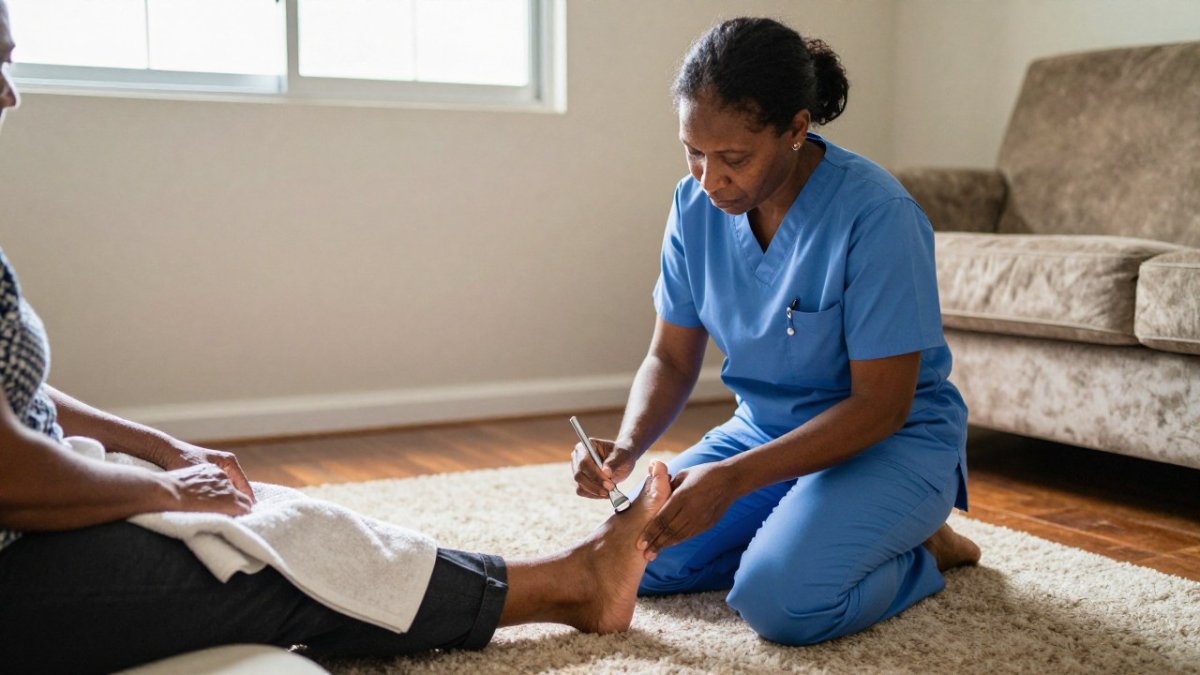
Foot Care Nursing With Gellis brings licensed, in-home foot care to seniors and people with diabetes.
Table of Contents
What Compression Socks Are and How Graduated Compression Works
Compression socks apply graduated pressure to the leg, tightest at the ankle and easing off as they move up the calf. That gradient helps push blood back toward the heart, which is why clinicians use them for a range of venous and lymphatic problems.
Medical compression stockings are described in clinical literature as a standard, non-invasive treatment option for venous and lymphatic diseases. Indications for medical compression stockings in venous and lymphatic disorders, a 2017 clinical review
Graduated compression is measured in pressure levels, and the right level depends on the condition being treated. Stronger garments are not automatically better.
Medical Conditions That May Benefit From Compression Socks
Compression is not a single treatment for a single problem. It is used across a range of venous, lymphatic, and swelling-related conditions, and the reason it helps differs from one to the next. The table below separates conditions where compression is commonly used to manage symptoms from those where it is used mainly to prevent a complication, and flags where a clinician should confirm the diagnosis before any garment is worn.
Condition | How compression is typically used | What to confirm first |
Varicose veins | Eases aching, heaviness, and swelling; does not remove the veins | Whether symptoms are vein-related or arterial |
Spider veins | May reduce discomfort; cosmetic appearance usually unchanged | That symptoms are not from a deeper vein problem |
Chronic venous insufficiency | Core management to counter pooling and skin changes | Compression class and fit, often by prescription |
Leg swelling and edema | Helps move fluid that has built up from poor venous return | Cause of swelling, especially if one-sided or sudden |
Lymphedema | Supports lymphatic drainage as part of a broader program | That swelling is lymphatic, not cardiac or renal |
Post-surgical recovery | Lowers clot risk and manages swelling during immobility | Surgical team's plan and any wound care needs |
Deep vein thrombosis prevention | Used during immobility and after surgery to reduce risk | Bleeding risk and arterial status |
Venous ulcers | Adjunct to wound care to reduce recurrence | That arterial disease has been ruled out |
Pregnancy-related swelling | Eases leg heaviness and swelling in later pregnancy | That swelling is not preeclampsia or a clot |
A common pattern is that people buy compression for a symptom, such as tired legs, without knowing which condition is driving it. That matters because the same symptom can point to a harmless vein issue or to something that needs urgent assessment. Compression may help manage the first; it can delay care in the second.
Varicose and Spider Veins
Varicose veins are enlarged, twisted veins that often appear on the legs, while spider veins are smaller, web-like veins close to the skin's surface. Compression is one of the most common approaches to easing the aching and heaviness these veins can cause. Compression socks support the vein walls and help keep blood moving upward rather than pooling. Compression can ease symptoms but does not shrink or remove the veins themselves, so it is a management tool rather than a cure.
Chronic Venous Insufficiency and Poor Circulation
Chronic venous insufficiency occurs when the valves in the leg veins no longer move blood efficiently back to the heart. Blood can then pool in the lower legs, causing swelling, skin changes, and fatigue. Compression is a core part of managing this condition, though the level and type of garment should be chosen with a clinician. "Poor circulation" is a looser phrase that can mean venous problems, arterial problems, or both, and compression that helps venous pooling can be harmful if the arteries are narrowed. That is why the diagnosis, not the symptom, should drive the choice.
Lymphedema and Lymphatic Drainage
Lymphedema is swelling caused by a buildup of lymph fluid, often after surgery, radiation, or an infection. Compression is used as part of a broader program that may include manual drainage, skin care, and exercise. It is not a stand-alone fix, and the garment usually needs professional fitting because the limb shape and swelling pattern differ from ordinary venous swelling.
Post-Surgical Swelling and Recovery
After surgery, compression is used for two reasons: to manage swelling and to lower the risk of a clot during the period when you are least mobile. The surgical team's instructions should always take priority over general advice, because the right garment and wear schedule depend on the procedure and your bleeding risk.
Venous Ulcers
Venous ulcers are open wounds that form when chronic venous insufficiency is poorly controlled. Compression is a standard part of ulcer care because it addresses the underlying pressure problem, but it should be applied as part of a wound-care plan. Applying strong compression over an ulcer without assessing the arteries can make things worse.
Pregnancy-Related Leg Swelling
Swelling and vein symptoms are common in pregnancy as blood volume rises and the growing uterus presses on pelvic veins. Compression can ease heaviness and swelling, but sudden swelling of the face or hands, swelling in only one leg, or swelling with headache or visual changes needs urgent assessment rather than a pair of socks.
If you are unsure which category you fall into, the safest next step is a diagnosis, not a purchase. A clinician can tell you whether compression is likely to help, what level is appropriate, and what signs mean you should stop wearing it.
Compression Socks for Varicose Veins: What the Evidence Shows
Compression is widely used for varicose veins, but the evidence is more nuanced than the marketing suggests. Compression may ease symptoms such as aching and heaviness while the underlying vein problem remains. It is best treated as a symptom-management tool, and options should be reviewed with a healthcare provider.
Michigan Foot Doctors
Compression Socks for Leg Swelling and Edema
Leg swelling has many causes, from long periods of sitting to heart, kidney or liver conditions. Learn how to tell when your socks for swollen feet need replacing and whether they still fit. Compression can help reduce swelling that comes from poor venous return, but swelling that appears suddenly or in only one leg needs prompt medical attention. Read about common sock mistakes that can make swollen feet worse in seniors so you can avoid them.
Compression Socks and Blood Clots: Prevention and Post-Surgical Use
Compression is used to lower the risk of deep vein thrombosis, particularly after surgery or during long periods of immobility. A clinical review of graduated compression stockings reported asymptomatic deep vein thrombosis in 10.0% of patients wearing stockings and 10.5% of those not wearing them. Cochrane review, Graduated compression stockings, 2014 That result shows the difference was small in that population and does not mean stockings prevent every clot.
Compression should never replace the clot-prevention plan your surgical team sets. If you develop a painful, warm or swollen leg, seek urgent medical care.
Who Should Not Wear Compression Socks
Compression is not suitable for everyone, and the reasons fall into two groups: situations where compression should not be used at all, and situations where it may be used only under close supervision. Published reviews highlight risks and contraindications, and these matter most for people with severe arterial disease, certain skin infections, uncontrolled heart failure, or open wounds on the legs. Risks and contraindications of medical compression treatment, a 2020 review
Absolute contraindications are situations where compression should generally be avoided unless a specialist decides otherwise.
Relative contraindications are situations where compression may still be appropriate but needs professional judgment. These include diabetes with reduced sensation in the feet, because an ill-fitting garment can cause pressure injuries that go unnoticed; fragile or broken skin on the leg, because friction and pressure can worsen it; and significant leg deformity or unusual limb shape, because standard sizing may not fit safely.
A practical screening routine before you wear compression for the first time:
Check the pulses in your feet and ankles with a clinician if you have any history of arterial disease, leg pain when walking, or poorly healing wounds.
Inspect the skin for redness, breaks, rashes, or infection before every wear.
Confirm that any swelling has been assessed, especially if it is one-sided or came on suddenly.
Have the garment fitted rather than guessed, particularly if you have diabetes or reduced sensation.
Agree on a wear schedule and a stop rule with your care provider.
Watch out: numbness, tingling, coldness, bluish toes, increasing pain, or a red, warm, swollen leg while wearing compression are reasons to remove the garment and seek advice, not to push through.
Anyone with diabetes and reduced sensation in the feet should have a professional check the fit before wearing compression, because an ill-fitting garment can cause pressure injuries that go unnoticed. The same applies to people with heart failure or kidney disease, where fluid shifts can affect breathing and blood pressure.
Choosing the Right Compression Level and Talking to Your Care Provider
Choosing a compression level starts with the reason you are wearing the garment. Lower pressure levels are often used for everyday tired legs, while stronger medical grades are reserved for specific conditions and usually require a prescription or fitting. Measurements matter as much as the pressure rating, so a poorly sized sock can underperform or cause harm.

Bring a short list of questions to your care provider: what condition the compression is treating, what pressure level is appropriate, how often to wear it, and what signs mean you should stop and call. If you still need a clinician for foot care, find a licensed foot care nurse to start that conversation. Foot care can help with the practical side of caring for swollen or sensitive feet at home, and you can book an in-home visit. If you are looking for a trusted provider for senior foot care in Brampton, learn how to choose in-home foot care for seniors before you commit.
Foot Care Nursing With Gellis offers mobile foot care delivered to your home, so you can get expert support without the trip to a clinic. Book an Appointment to talk through your foot care needs with a licensed RPN and Foot Care Specialist.
Frequently Asked Questions
What medical conditions may benefit from compression socks?
Compression socks are commonly used for varicose veins, chronic venous insufficiency, leg swelling (edema), and to help reduce the risk of blood clots after surgery or during long periods of immobility. A clinical review describes medical compression stockings as a standard, non-invasive treatment option for venous and lymphatic diseases. Whether they are suitable depends on your diagnosis, circulation and overall health, so discuss your condition with a qualified health professional before starting.
Can people with diabetes wear compression socks?
Some people with diabetes can wear compression socks, but reduced circulation or nerve damage in the feet changes the risk picture. Poorly fitting garments can cause pressure injuries that heal slowly. Anyone with diabetes should have their feet and circulation assessed by a healthcare provider before using compression, and should check their skin daily while wearing them.
Can compression socks help prevent blood clots?
Graduated compression is used to support circulation and is part of care for some people at risk of blood clots, including after surgery. A Cochrane review of graduated compression stockings found that the evidence does not show a reliable preventive effect in the studied populations. Symptoms such as sudden leg swelling, pain or warmth need urgent medical attention.
Who should not wear compression socks?
Published clinical literature highlights risks and contraindications of medical compression treatment, so compression is not suitable for everyone. People with severe arterial disease, certain skin infections, or some heart and circulation conditions may need a different approach. Always ask a healthcare provider for a screening before buying or wearing compression socks.

Comments