7 Best Sock Materials for Preventing Cracked Heels

Last Updated: November 14, 2026
Quick Summary
The best sock materials for preventing cracked heels are merino wool and bamboo, which absorb and release moisture so skin stays drier, plus synthetics that wick fast for sweaty feet. Cotton absorbs well but dries slowly, so it is a poor choice for long days in closed shoes. Pair moisture-moving fibers with a cushioned sole, defined heel pocket and non-binding cuff.
Merino wool absorbs moisture and releases it into the air, keeping the skin surface drier than cotton.
Cotton holds moisture inside the fiber, so a sweaty foot stays against a damp sock for hours.
Check the label on bamboo socks, since many are blends with synthetic fibers.
Look for natural fiber at 60% or higher for daily wear, plus a reinforced heel panel.
Use gel moisturizing socks overnight and breathable fabric socks during the day.
Heels still cracking despite the cream?
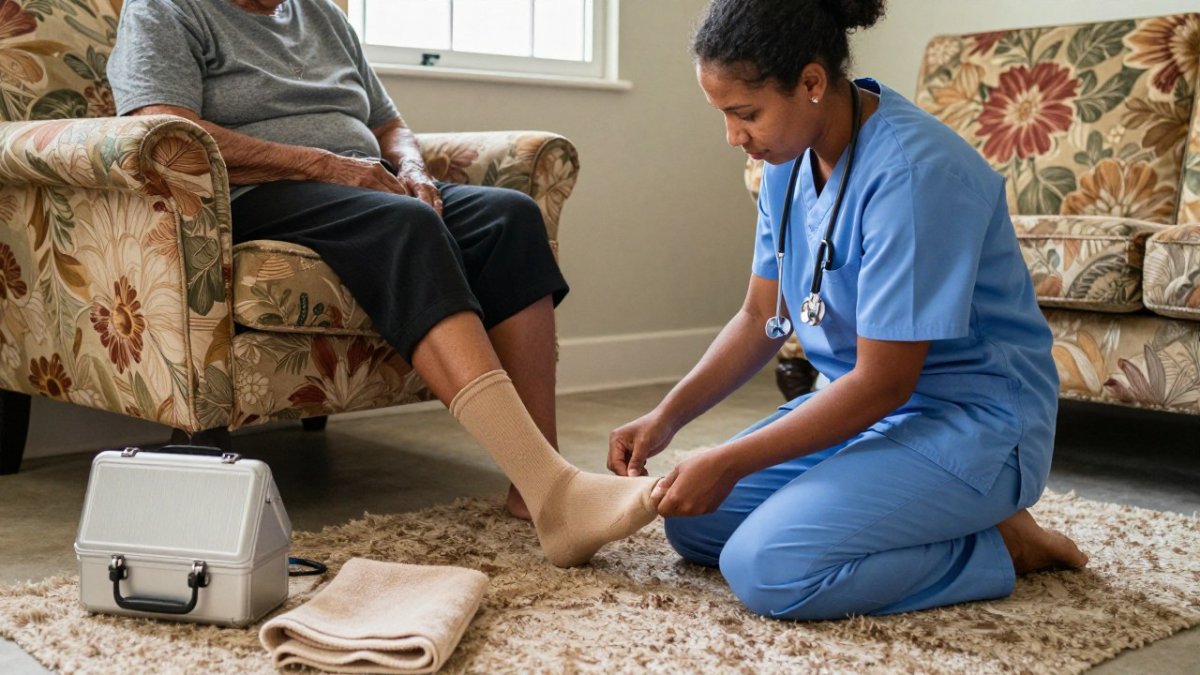
We bring licensed foot care to your home, with guidance on socks, skin care, and daily routine.
Table of Contents
Why Sock Materials Matter for Cracked Heels
Cracked heels are a moisture problem before they are a cosmetic one.
Cracked heels are often seen in home foot care visits: people with good creams, good intentions, and the wrong socks.
Here is what most guides get wrong: they rank fabrics by softness. Softness is not the deciding factor. Moisture handling is. A buttery cotton sock that stays damp against your heel for eight hours will do more damage than a slightly rougher wool blend that dries fast.
How to Compare Sock Materials: Four Criteria That Decide
Four criteria decide whether a sock helps or hurts a cracked heel: how it absorbs and moves moisture, how well it breathes, how it cushions and reduces friction, and how it holds up over repeated washing. Fabric type sets the ceiling on all four, but construction, thickness, and fit decide whether you actually get there.
Moisture Absorption and Wicking
Absorption and wicking are not the same job. Absorption is how much water a fiber takes in; wicking is how fast it moves that moisture away from skin so it can evaporate. Cotton absorbs well and wicks poorly.
For heel care, a fiber that pulls sweat away and releases it is generally preferable. A sock that holds moisture against thickened heel skin softens it in the wrong way, macerating the surface and making cracks more likely to deepen.
Breathability and Ventilation
Breathability describes how easily air and water vapor pass through the fabric. It matters most in footwear that already traps heat: closed shoes, boots, and anything worn for long stretches. A breathable sock reduces the sweat that starts the whole cycle.
Knit structure counts as much as fiber here. A thin, loosely knit sock vents better than a thick, dense one of the same material.
Cushioning, Friction Reduction and Heel Reinforcement
Cracked heels split under shear stress, the sideways friction that happens as your heel moves inside a shoe. Cushioning and a reinforced heel panel reduce that stress. So does a non-binding fit: a sock that grips too tightly at the ankle or bunches at the heel creates pressure points and rubbing.
Look for a cushioned sole, a defined heel pocket, and a cuff that stays up without leaving a mark. Those three features do more for a fissured heel than any amount of extra thickness.
Material-by-Material: Cotton, Wool, Bamboo and Synthetics
No single fiber wins on every criterion, and that is the point of a comparison. The table below summarizes how each material behaves for heel care; the sections after it explain the trade-offs in practice.
Material | Moisture Handling | Breathability | Best For | Watch Out For |
Cotton | Absorbs well, dries slowly | Moderate | Cool, dry indoor wear | Stays damp against skin |
Merino wool | Absorbs and releases well | Good | Year-round, temperature swings | Higher cost, needs gentle wash |
Bamboo | Absorbs well, feels cool | Good | Sensitive or easily irritated skin | Blended with synthetics often |
Synthetics | Wicks fast, absorbs little | Varies by knit | Sweaty feet, active days | Can irritate sensitive skin |

Cotton: Soft but Slow to Dry
Cotton is a familiar option. It feels soft and breathes reasonably. The problem is drying time. Cotton holds moisture inside the fiber, so a sweaty foot stays in contact with a damp sock for hours.
For heel care, that is a real drawback. Damp skin softens and weakens, and thickened heel skin that stays wet is more prone to splitting. Cotton works fine for short wear in cool conditions.
Merino Wool and Other Wools: Warmth Without the Sweat
Merino wool is a material many people find useful for year-round heel care. It absorbs moisture and releases it into the air, so the skin surface stays drier than it would in cotton.
The common mistake is assuming all wool itches. Fine merino is soft against skin. Coarser wools are not, and those are the ones to avoid for daily wear. Merino costs more and needs a gentle wash cycle, but for many people it is the single best everyday choice.
Bamboo Fabric: Softness and Odor Control
Bamboo fabric is soft, drapes well, and feels cool against the skin. It absorbs moisture readily and has natural odor-resistant properties, which helps with the smell that builds up in closed footwear. For anyone with sensitive skin, it is often more comfortable than wool.
One caveat: check the label. Many bamboo socks are blends with synthetic fibers, and the blend ratio changes how the sock performs. A high bamboo content behaves very differently from a bamboo-synthetic mix.
Synthetic Fibers: Wicking, Durability and Skin Sensitivity
Synthetics such as polyester and nylon wick moisture quickly and dry fast, which makes them useful for sweaty feet and active days. They are also durable and hold their shape through repeated washing.
If you have reacted to synthetics before, choose a sock with a natural-fiber lining or a higher natural-fiber content. For a closer look at matching fabric to reactive skin, our guide on socks for sensitive skin walks through the options.
The Best Socks for Dry Cracked Feet: What to Look For
The best socks for dry cracked feet combine a moisture-moving fiber with a cushioned sole, a defined heel pocket, and a non-binding cuff. Fabric gets you most of the way; construction finishes the job.
Use this checklist when you shop:
Fiber content listed clearly, with natural fiber at 60% or higher for daily wear
Cushioned sole under the heel and ball of the foot
Reinforced heel panel to resist wear and reduce friction
Non-binding cuff that stays up without leaving a mark
Seamless toe if you have sensitive skin or diabetes
Two or three pairs rotated, so one is always fully dry
Watch out: sizing matters more than most shoppers expect.
For a deeper breakdown of fabrics and fits for dry skin, see our article on dry feet socks.
Moisturizing Socks for Cracked Heels: When Gel Beats Fabric
Moisturizing socks for cracked heels are a different product category from everyday socks, and mixing up the two is where many home routines go wrong.
Use gel or moisturizing socks when the goal is to drive hydration into thickened, fissured skin.
Choose breathable everyday socks when the goal is managing sweat and friction during the day. Wearing gel socks inside shoes for hours is uncomfortable and counterproductive, since they trap heat and moisture in the wrong way.
Socks to Wear With Heel Cream: Getting the Overnight Routine Right
The right socks to wear with heel cream are clean, breathable, and dedicated to the routine. Apply a urea-based or petrolatum-based heel cream to clean, dry feet, then pull on a pair of moisturizing socks or a soft cotton pair reserved for bedtime.
A few practical details make the difference:
Apply cream to the heels and soles, not between the toes, where trapped moisture can cause problems
Give the cream a minute to absorb before putting socks on
Wear the socks for the night, then wash them before the next use
Keep a separate pair for this routine so daytime socks stay clean and dry
If you are unsure how to moisturize without creating problems between the toes, our guide on moisturizing dry feet without lotion between toes covers the technique in detail.
How to Treat Cracked Heels at Home: A Practical Daily Plan
Treating cracked heels at home comes down to three habits repeated daily: exfoliate gently, moisturize consistently, and manage moisture with the right socks. Results vary, and shallow cracks may improve with consistent care over several weeks. Deep, painful, or bleeding fissures need professional assessment.
Here is the plan we walk patients through:
Soak and soften. Soak feet in lukewarm water for about ten minutes, a few times a week. Not hot, and not daily if skin is already dry.
Exfoliate gently. Use a pumice stone or foot file on damp heels, once or twice a week. Stop if the skin becomes raw.
Moisturize twice daily. Apply a thick heel cream in the morning and again at bedtime, then cover with socks overnight.
Wear the right socks. Merino or bamboo by day, moisturizing socks at night. Change socks daily and never wear damp ones.
Protect the heel. Choose shoes with a closed, cushioned back and avoid walking barefoot on hard floors.
Watch out: people with diabetes or reduced circulation should not self-treat cracked heels with sharp tools or aggressive filing. For seasonal context and a routine tuned to cold, dry weather, read our article on cracked heels in Canadian winters.
Book an In-Home Foot Care Assessment
Cracked heels that keep returning, bleed, or come with pain need more than a better sock. They need an assessment.
In-home visits can include an assessment of your feet and skin and guidance on footwear and daily care. Learn what to expect from our first-time mobile assessment and treatment service, then book an appointment and take the first step toward walking in comfort.
Cracked heels rarely heal from cream alone. They heal when moisture, friction, and footwear stop working against each other, and the right socks are the simplest place to start.
Frequently Asked Questions
What is the best sock material for cracked heels?
There is no single winner because the right sock depends on whether you need all-day moisture control or overnight hydration. For daytime wear, merino wool and moisture-wicking synthetics move sweat away from the skin and dry faster than cotton. For overnight repair, a gel-lined moisturizing sock holds cream against the heel. A practical rotation pairs a breathable wool or synthetic sock by day with a dedicated moisturizing sock at night. Avoid 100% cotton for long wear if your feet sweat, because it holds moisture against the skin.
Are cotton or wool socks better for dry, cracked heels?
Wool, particularly merino, generally suits dry cracked heels better for daily wear. Wool fibers absorb moisture vapor and release it, so feet stay drier, and the natural crimp adds cushioning that reduces friction on the heel. Cotton is soft and breathable but absorbs water slowly and dries slowly, so sweat can sit against the skin for hours. If you prefer cotton, choose a blend with a wicking fiber and change socks the moment they feel damp. Anyone with wool sensitivity should test a merino blend first.
Do moisturizing socks help prevent cracked heels?
Moisturizing socks help once the skin is already dry or fissured, and they can prevent a mild problem from worsening. Gel-lined socks seal in heel cream or a petroleum-based ointment so the skin rehydrates overnight. They are not a substitute for daily moisture management, though. Wearing breathable socks during the day to keep feet dry, changing them when damp, and applying cream before bed gives the best results. If cracks are deep, bleeding or painful, have a foot care professional assess them.
How often should you change socks if you have cracked heels?
Change socks at least once a day, and more often if your feet sweat or you are active. Damp fabric softens the skin and increases friction, which can widen existing cracks. People with diabetes or circulation problems should inspect feet and change socks daily, checking for redness, swelling or new breaks in the skin. Keep a spare pair handy in humid weather. Wash socks in a gentle detergent and avoid fabric softener, which can reduce wicking performance over time.

Comments