Diabetic Foot Care Covered by Insurance in Canada

Last Updated: October 28, 2026
Quick Summary
Diabetic foot care is not covered by OHIP when provided privately by registered nurses, though some clients may get money back through extended health benefits. Provincial plans generally insure treatment of a condition, such as an active ulcer or infection, but not routine maintenance like nail trimming and callus smoothing. Most extended health plans pay part of the cost up to a yearly limit.
In 2011, diabetic foot ulcers in Canada led to 16,883 hospital admissions and 327,140 hospital days.
Insured care covers active ulcers, infections, wound dressing changes, and post-surgery care.
Uninsured care is maintenance such as routine nail trimming, callus smoothing, and hygiene without an active problem.
Most extended health plans pay a set amount per visit or a percentage like 80% up to a yearly limit.
Only about half of people living with diabetes receive the recommended annual foot examination by a health care provider.
Table of Contents
What Diabetic Foot Care Involves and Why It Matters
Diabetic foot care is the routine checking, cleaning, and treating of feet to prevent sores, infections, and serious complications in people with diabetes. It matters because most serious foot problems start small and can be stopped early.
The numbers show why. In 2011, diabetic foot ulcers in Canada led to 16,883 hospital admissions, 327,140 hospital days, and 31,095 emergency-room or clinic visits, according to the economic burden study on diabetic foot ulcers. That is a lot of care that better prevention could avoid.
What does diabetic foot care covered by insurance in Canada actually include?
A full foot assessment: skin, nails, pulses, and feeling in the feet
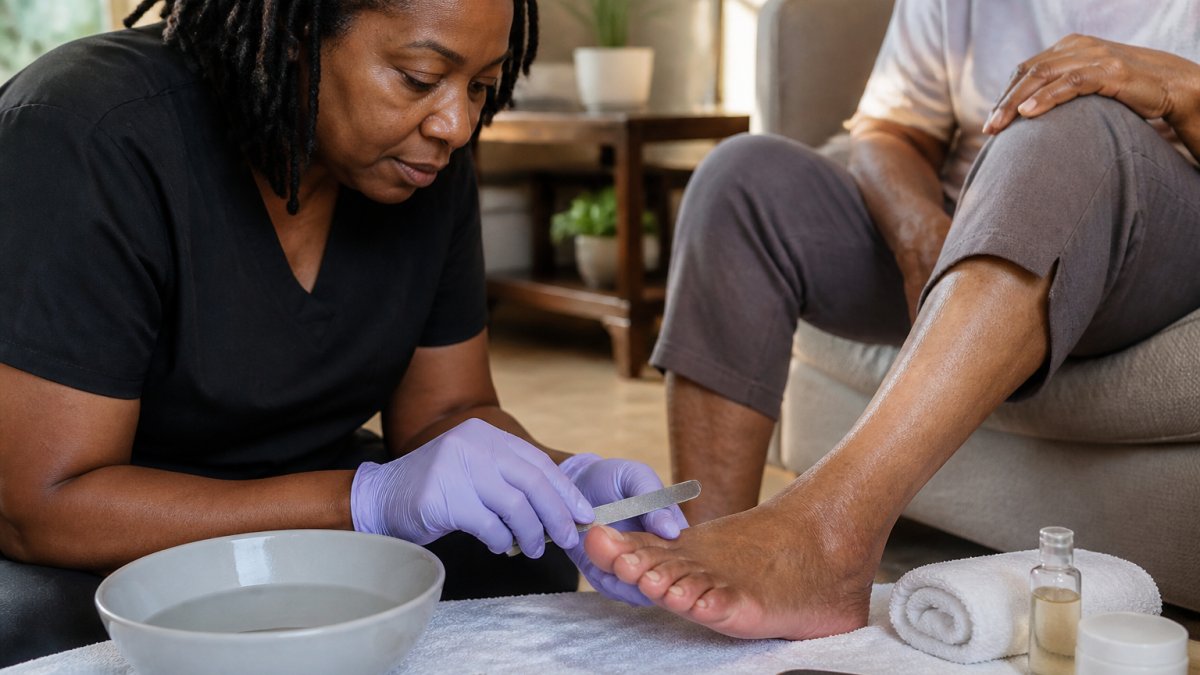
Toenail trimming and care for thick or ingrown nails
Callus and corn reduction
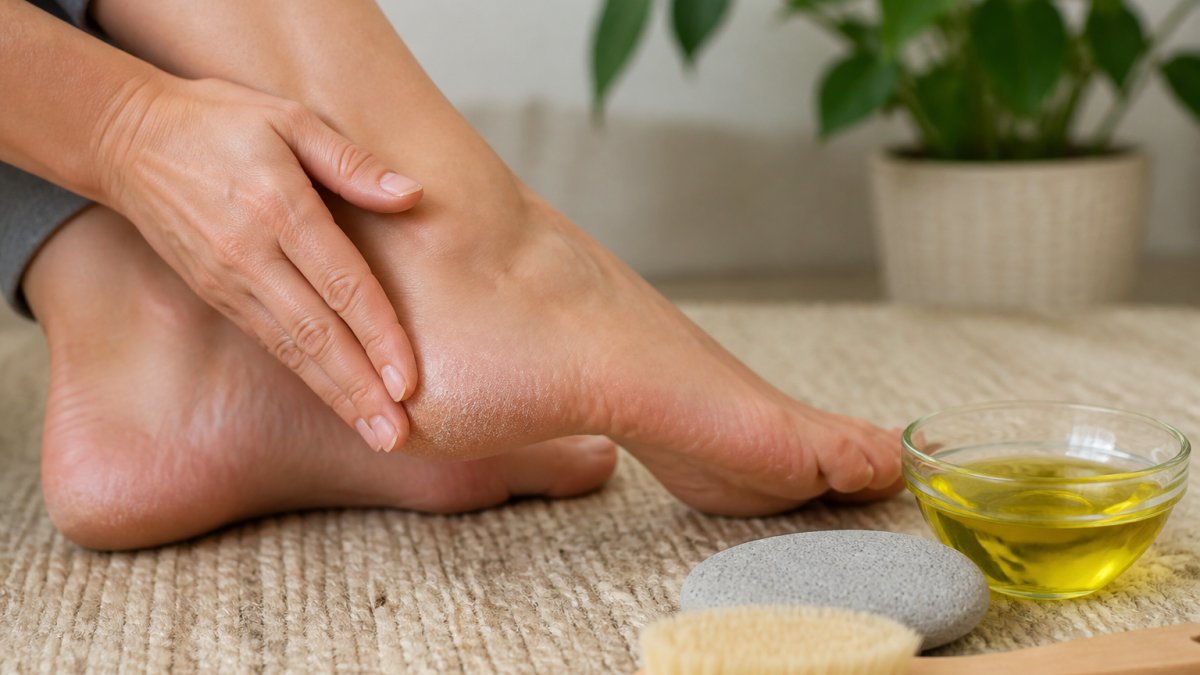
Skin care for dryness and cracking
A daily foot inspection routine you can do at home
Advice on footwear and when to see a doctor
Prevention is the whole point. Diabetes Canada notes that better education, screening, and affordable treatment can prevent serious foot complications, including amputation (Diabetes Canada's amputation prevention position). For a deeper look at why regular checks matter, see our guide on the importance of regular foot assessments for diabetics.
What Provincial Health Plans Cover for Diabetic Foot Care
Foot Care Canada states that OHIP does not cover private foot-care services provided by registered nurses, though some clients may get money back through extended health benefits (Foot Care Canada's coverage FAQ). Other provinces run their own rules, so check your own plan.
How the medical-necessity line is drawn
Insured care is treatment of a condition, an active ulcer, an infection, a wound dressing change, or care following surgery, usually delivered through a hospital, wound clinic, or a physician's office.
Uninsured care is maintenance, routine nail trimming, callus smoothing, and hygiene for feet without an active problem, even when the person has diabetes.
What varies by province and territory
Who can bill the plan. Some plans recognize podiatrists and physicians but not chiropodists or nurses; others recognize chiropody as a distinct regulated profession. A provider who cannot bill the plan will charge you privately even when the care is medically necessary.
Where care must happen. Hospital outpatient clinics and wound-care clinics are usually funded differently from private in-home visits. A home visit by a private nurse is typically not an insured service.
Whether a physician referral is required. Some plans require a referral before a specialist foot-care visit is reimbursed; others do not.
Programs for high-risk feet. Several provinces run diabetes or wound-care programs that fund assessment and treatment for people at high risk, often through regional health authorities rather than the fee schedule.
How to confirm your own coverage
Call your provincial plan or check its website before you book, and ask about the specific service you want, not "foot care" in general.
Is this service insured when provided by a nurse, a chiropodist, or a podiatrist?
Does it need to be provided in a hospital or clinic to be covered?
Is a physician referral required?
Are home visits excluded?
Here is how provincial plans split insured treatment from uninsured maintenance, and what varies between provinces.
Item | Value | Note |
OHIP and private nurse foot care | Not covered | Some clients may get money back through extended health benefits |
Insured care | Treatment of a condition | Active ulcer, infection, wound dressing change, or post-surgery care |
Uninsured care | Maintenance | Routine nail trimming, callus smoothing, hygiene without an active problem |
Who can bill the plan | Varies by province | Some recognize podiatrists and physicians but not chiropodists or nurses |
Where care must happen | Varies by province | Private in-home nurse visits typically not insured |
Physician referral | Varies by province | Some plans require one before specialist foot-care reimbursement |
High-risk foot programs | Several provinces | Fund assessment and treatment, often through regional health authorities |
Foot Care Nurse Insurance Coverage: What Private Plans Pay
Most extended health plans pay part of the cost up to a yearly limit, a set amount per visit or a percentage like 80%. Your plan book spells out which.
Extended Health Benefits and Reimbursement
A receipt that shows the nurse's name and licence number
The date of service and a short description of the care
A plan member number and claim form
Sometimes a doctor's note or referral (Source: Diabetes Canada's amputation prevention position)
Podiatrist Coverage for Diabetes: Chiropody and Specialist Care
Deep or infected wounds
Bone and joint problems in the foot
Custom orthotics and therapeutic shoes
Surgery or advanced treatment
If you are choosing between them for yourself or a parent, our guide on foot care nurse vs podiatrist in Ontario breaks down who does what.
How to File a Foot Care Insurance Claim
Confirm your coverage first. Ask your insurer what foot care services your plan pays for and what proof it needs.
Get the care. Keep every receipt and ask for a detailed invoice.
Gather your documents. You will need the invoice, your plan member number, and any referral your plan requires.
Submit the claim. Most insurers let you file online or through an app.
Track it. Follow up if you do not hear back within the stated time.
Eligibility by Diabetes Risk and Medical Need
Only about half of people living with diabetes receive the recommended annual foot examination by a health care provider, according to a 2026 Canadian study on preventative foot care. That gap is exactly why knowing your risk matters. For a closer look, read about diabetic neuropathy and your feet.
Nerve damage, numbness, or reduced sensation
Poor circulation or blood flow problems
Past foot ulcers or amputations
Foot deformities, thick nails, or calluses
Vision problems that make self-checks hard
Costs, Out-of-Pocket Examples, and Therapeutic Footwear
Out-of-pocket costs vary by provider, service, and region, so we do not quote fixed prices. Here is how the numbers fit together so you can estimate your yearly cost. Ask each provider for a written quote.
What drives the price of a visit
The type of visit. Routine maintenance, nail trimming, callus reduction, skin care, is the lowest-cost visit. Complex wound care, debridement, or a visit that includes a full risk assessment takes longer and costs more.
Where it happens. A clinic visit is usually less expensive than an in-home visit, because the provider's travel time is built into the home-visit fee.
The provider's credentials. A registered nurse, a chiropodist, and a podiatrist each bill differently, and the same service may carry a different fee depending on who provides it.
Your plan's structure. A yearly limit, a per-visit cap, and a reimbursement percentage all change what you actually pay.
A worked example of reimbursement math
Per-visit fee: the amount on your invoice.
Reimbursement rate: the percentage your plan pays, 80% in this example.
Your share per visit: the remaining 20%.
Yearly limit: the maximum the plan will pay across all visits. Once you reach it, you pay 100% of every further visit.
Therapeutic footwear and custom orthotics
Is footwear a listed benefit? Many plans cover orthotics but not shoes, or cover shoes only when they are prescribed as part of a diabetic foot-care program.
What documentation is required? A prescription, a biomechanical assessment, or a letter from your physician is commonly requested.
Is there a replacement schedule? Plans often limit how often orthotics or therapeutic shoes can be replaced, for example, once every one to three years.
Does the provider need to be on a list? Some plans reimburse only when the orthotics are made by a recognized pedorthist or dispensed by an approved clinic.
Keeping records that protect your claim
Keep every invoice and receipt, and confirm the provider's licence number appears on each one.
Note the date, the service, and the medical reason for the visit.
Track your yearly limit as you go, so you know when you are approaching it.
Keep prescriptions and assessments for footwear and orthotics with your claim documents.
How to Verify Your Coverage Before Booking In-Home Care

Ask your insurer:
[ ]
[ ]
[ ]
[ ]
Then ask the provider:
[ ]
[ ]
[ ]
Our checklist of questions to ask a foot care nurse covers what to confirm. Once coverage is clear, book a first mobile assessment and treatment and get care at home.
Frequently Asked Questions
Is diabetic foot care covered by insurance in Canada?
Coverage depends on your plan. Confirm your plan details directly with your insurer before booking.
Does provincial health coverage pay for diabetic foot care?
Check your provincial ministry of health and your own plan for current coverage information.
Does private insurance cover a foot care nurse?
Call your insurer before your appointment to ask about coverage for the service and provider.
What documents do I need to submit a foot care insurance claim?
Ask your insurer what documents it requires for a claim.
Sorting out what your plan covers should not stand between you and healthy feet. At Foot Care Nursing With Gellis, our licensed RPN and Foot Care Specialist brings specialized diabetic foot care to your door, so you can walk in comfort and move with confidence. We focus on prevention, careful assessment, and clear guidance on your coverage questions. Get started with Foot Care Nursing With Gellis and book an appointment for convenient in-home care.

Comments