Foot Care Nurse vs Podiatrist vs Chiropodist in Ontario: Which One Do You Need?

Foot care nurse vs podiatrist vs chiropodist: if you’re trying to choose one for yourself or a parent, the titles alone won’t tell you much. Ontario uses all three, and each one can do different things. So who should trim thick toenails? Who treats heel pain? And which one does OHIP actually pay for? This guide answers those questions in plain language. You’ll see what each professional can and can’t do, what OHIP covers, and how to match your foot problem to the right person. That way, you don’t waste a trip or delay care you really need.

A foot care nurse handles routine foot and nail care, like thick toenails, corns, calluses, and diabetic foot checks, often at home. A chiropodist assesses and treats foot conditions, does minor soft-tissue surgery, and prescribes custom orthotics. A podiatrist can do all that, plus communicate a diagnosis and do some forefoot bone surgery.
Foot Care Nurse vs Chiropodist vs Podiatrist at a Glance
Here’s how the three compare in Ontario. Use the table as a quick reference, then read on for the details.
Foot care nurse (RPN or RN) | Chiropodist | Podiatrist | |
Training | College diploma (RPN) or university degree (RN), plus foot care courses | Usually a post-secondary diploma in chiropody | Doctor of Podiatric Medicine (DPM) from the US or Québec |
Regulator | College of Nurses of Ontario | College of Chiropodists of Ontario | College of Chiropodists of Ontario |
Can do | Nail trimming and filing, thick nails, corns and calluses, foot checks, and teaching | Assess and treat foot conditions, soft-tissue foot surgery, injections, some prescribing, and custom orthotics | Everything a chiropodist does, plus communicate a diagnosis and forefoot bone surgery |
Can’t do | Diagnose, prescribe, do surgery, or make custom orthotics | Communicate a diagnosis or operate on bone | Use the title “doctor” in Ontario (chiropodists can’t either) |
OHIP coverage | No | No | Partial: $7–$16 per visit, up to $135 a year, plus $30 for x-rays; surgery not covered |
Referral needed to book? | No | No; check your insurer | No; check your insurer |
Home visits | Common | Many make house calls | Many make house calls |
Sources: College of Chiropodists of Ontario, College of Nurses of Ontario, Ontario.ca, and the Ontario Podiatric Medical Association.
What Does a Foot Care Nurse Do?
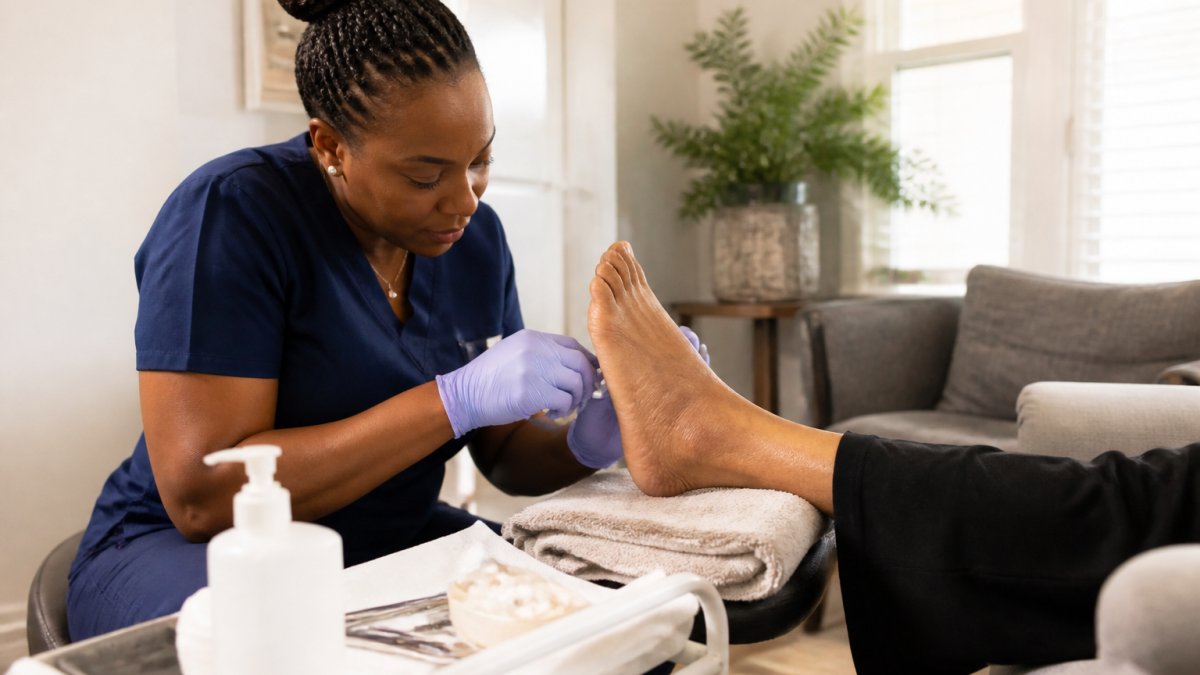
A foot care nurse is a registered nurse (RN) or registered practical nurse (RPN) who has taken extra training in foot and nail care. Like every nurse in Ontario, they answer to the College of Nurses of Ontario. The work is hands-on, practical, and focused on prevention.
Services a foot care nurse provides
A typical visit covers the jobs that get harder to do yourself as you age:
Trimming and filing toenails, including thick, curved, or brittle nails
Gently reducing corns and calluses so your shoes hurt less
Routine diabetic foot care and regular foot checks
Fingernail care for people who can’t manage it on their own
Simple advice on socks, shoes, skin care, and what to watch for
During each visit, the nurse also looks for changes in skin, colour, and circulation. If something looks off, they’ll tell you and suggest who to see next.
What a foot care nurse can’t do
Here’s the honest part. In Ontario, RNs and RPNs aren’t authorized to communicate a diagnosis, according to the College of Nurses of Ontario. A foot care nurse also doesn’t do foot surgery, prescribe medication, or make custom orthotics.
That’s not a flaw. It’s a clear boundary. So a good foot care nurse will say, “This needs a chiropodist,” when that’s the right call.
Pros and cons of seeing a foot care nurse
Pros:
Comes to your home or care residence, so there’s no drive, parking, or icy sidewalk
Focuses on routine care that stops small problems from growing
Leaves time for questions from you and your family
Cons:
Can’t diagnose or treat complex foot conditions
Can’t prescribe orthotics or medication
OHIP doesn’t pay for private foot care nursing
Why home visits help seniors
Many seniors stop cutting their own toenails because of poor eyesight, stiff hips, or shaky balance. Getting to a clinic isn’t easy either, especially during Ontario winters. That’s why home visits make sense for so many families. If you’re caring for a parent, this page on foot care for seniors in Brampton explains what a home visit looks like.
Chiropodist vs Podiatrist in Ontario: Why the Difference Is Real
In the UK and many other places, “chiropodist” and “podiatrist” mean roughly the same thing. In Ontario, they don’t. The two titles come with different training and different legal powers.
Who regulates chiropodists and podiatrists?
The College of Chiropodists of Ontario regulates both. Only people who pass its exams and stay in good standing can use either title. You can also look up any chiropodist or podiatrist on the College’s Public Register.
What each one can legally do
According to the College, chiropodists can:
Cut into the soft tissue under the skin of the foot
Inject approved substances into the foot
Prescribe certain drugs, if they hold prescribing privileges
Give certain substances by inhalation
Podiatrists can do all of that. In addition, they can communicate a diagnosis and cut into the bones of the forefoot. Both can prescribe custom orthotics when they’re medically necessary.
Why you’ll meet more chiropodists than podiatrists
Ontario chose a UK-style chiropody model in 1980. According to the Ontario Podiatric Medical Association, Ontario hasn’t registered any new podiatrists since July 1993. Podiatrists need a Doctor of Podiatric Medicine degree from a US college or from the program at the Université du Québec à Trois-Rivières. By contrast, most Ontario chiropodists hold a post-secondary chiropody diploma.
This could change. The College supports a move to a “Full Scope Podiatry Model.” However, at the time of writing, that’s a proposal, not law.
Is a podiatrist covered by OHIP?
Partly. Ontario.ca says OHIP covers $7 to $16 of each podiatrist visit, up to $135 per person per year, plus $30 for x-rays. However, OHIP doesn’t cover surgery by podiatrists. It doesn’t cover chiropodists at all.
The good news? Extended health plans and Veterans Affairs may cover chiropody and podiatry services. So call your insurer before you book.
Do I need a referral to see a chiropodist in Ontario?
Not to book. The College tells the public to find a chiropodist or podiatrist on its register and contact the clinic directly. Still, some insurance plans want a doctor’s note before they pay you back. Check your plan first, so you don’t get stuck with the bill.
Is a Foot Care Nurse a “Foot Doctor”?
No. And here’s something most articles skip: chiropodists and podiatrists can’t call themselves “doctor” in Ontario either. The College of Chiropodists of Ontario says the Regulated Health Professions Act restricts that title.
So when people search for a “foot doctor in Brampton,” they usually mean anyone who can help sore feet. A foot care nurse is a licensed nurse, not a foot doctor. If you need a medical doctor for a foot problem, start with your family doctor or a walk-in clinic. They can examine you and refer you on if needed.
Which One Do You Need? Match Your Foot Problem to the Right Professional
Most articles stop at definitions. Instead, let’s start with the problem you actually have.
Thick, long, or hard-to-cut toenails
Start with a foot care nurse. Trimming and thinning tough nails is everyday work for them. If a nail is painful, discoloured, or lifting, though, ask about a chiropodist assessment too.
Corns and calluses
A foot care nurse can reduce them safely for comfort. However, if they keep coming back fast, ask a chiropodist why. The cause may be your shoes, the way you walk, or your foot shape, and that’s their area.
Diabetic foot care: routine care vs wounds
For routine nail care and regular foot checks, a foot care nurse is a good fit. Here’s what diabetic foot care at home includes. On the other hand, an open sore, blister, or wound needs a chiropodist, podiatrist, or doctor right away. With diabetes, small wounds can turn serious quickly.
Ingrown toenail: who to see
For a mild case, a foot care nurse can trim the nail straight and smooth the edge, which may ease pressure. But if the toe is red, swollen, or draining pus, or the problem keeps coming back, see a chiropodist or podiatrist. They can do minor procedures that a nurse can’t.
Heel pain, bunions, flat feet, and orthotics
Go to a chiropodist or podiatrist. These problems often involve how your foot moves, and custom orthotics may help. For bunion surgery on bone, ask a podiatrist or your doctor about your options, including a referral to an orthopaedic surgeon.
Red flags: when to call your doctor or get urgent care
Don’t wait for a routine foot visit if you notice:
Spreading redness, warmth, or swelling
Pus, or a wound that isn’t healing
A toe turning black, blue, or very pale
Fever along with foot pain
Sudden numbness, or you can’t put weight on your foot
How to Check a Foot Care Provider’s Licence in Ontario
It takes two minutes, and it protects you. Here’s how:
For a nurse, search the College of Nurses of Ontario’s “Find a Nurse” register. Confirm they’re a registered RPN or RN.
For a chiropodist or podiatrist, search the College of Chiropodists of Ontario’s Public Register. It also shows prescribing privileges and whether they make house calls.
Remember that the College of Chiropodists doesn’t regulate pedicurists, nail technicians, or pedorthists. A spa pedicure feels nice, but it isn’t medical foot care.
Paying for Foot Care: OHIP, Insurance, and Veterans’ Benefits
OHIP doesn’t pay for private foot care nursing. Some insurance plans and veterans’ benefits may cover foot care nursing. So check your plan, and ask what your insurer needs to see on the receipt.
Payment with a mobile nurse is usually simple. With Gellis, for example, you pay online when you book, or after the visit by cash or e-transfer.
Finding a Mobile Foot Care Nurse in Brampton and Mississauga
If routine foot care is what you need, Foot Care Nursing with Gellis brings it to your door. Gellis Jerome-Milandou is a licensed Registered Practical Nurse based in Brampton. She visits clients at home and in care residences across Brampton, Mississauga & Surrounding Areas. Because there’s no clinic, you never have to brave winter roads or hunt for parking.
Every visit uses single-use instruments, full PPE, and strict infection control. Families in Peel Region’s other big city can learn more about booking a foot care nurse in Mississauga.
Services and prices (CAD):
First Time Mobile Foot Care and Assessment Service: 1 hr, $75
Follow-up – Ongoing Foot Care Service: 30 min, $70
Diabetic Foot Care: 1 hr, $75
Ongoing Finger-nails & Foot Care Treatment Service: 45 min, $85
And if your problem needs a chiropodist, podiatrist, or doctor instead, Gellis will tell you plainly.
Choosing the Right Foot Care for You
Here’s the quick recap. A foot care nurse is your go-to for routine nails, corns, calluses, and diabetic foot checks, especially at home. A chiropodist handles foot conditions, minor soft-tissue surgery, and orthotics. A podiatrist adds diagnosis and forefoot bone surgery, and OHIP partly pays for podiatrist visits.
Not sure where to start? For routine care in Brampton or Mississauga, book a home foot care visit and get your feet checked without leaving home.
Frequently Asked Questions
What is the difference between a chiropodist and a podiatrist in Ontario?
The College of Chiropodists of Ontario regulates both. However, podiatrists can also communicate a diagnosis and operate on forefoot bones, and OHIP partly covers their visits. Chiropodists can’t do either, and OHIP doesn’t cover them.
Is a podiatrist covered by OHIP?
Partly. OHIP pays $7 to $16 per visit, up to $135 a year, plus $30 for x-rays. It doesn’t cover podiatric surgery or any chiropodist services.
Do I need a referral to see a chiropodist in Ontario?
You don’t need one to book. You can contact the clinic directly. However, some insurance plans ask for a doctor’s referral before they reimburse you, so check first.
Can a foot care nurse treat an ingrown toenail?
A foot care nurse can trim a mild ingrown nail properly to ease pressure. If the toe is infected or swollen, or the nail keeps growing in, see a chiropodist, podiatrist, or doctor.
Does insurance cover a foot care nurse?
Some insurance plans and veterans’ benefits may cover foot care nursing. OHIP doesn’t. Call your insurer and ask what they need on your receipt.


Comments