What Are the Early Signs of Diabetic Foot Problems?

Last Updated: October 26, 2026
Quick Summary
The early signs of diabetic foot problems include numbness or tingling in your toes and feet, dry or cracked skin, redness and swelling, calluses or blisters, and slow-healing cuts or wounds. Catching these warning signs early through regular self-examination helps prevent serious complications.
Seek urgent care immediately for open wounds, signs of infection, black tissue, severe pain, or fever with foot problems.
Test for numbness daily in your toes, ball of foot, and heel using light touch sensation checks.
Apply antibiotic ointment to cuts and scrapes, cover with sterile bandage, and watch for increasing redness or drainage.
Compare one foot to the other during self-examination; any difference between them warrants professional evaluation.
Schedule routine appointments for mild numbness, dry skin not improving with moisturizer, and thickening or discoloring toenails.
Table of Contents
Early Signs of Diabetic Foot Problems You Shouldn't Ignore
Foot problems in people with diabetes often start small: a tiny blister, a patch of dry skin, or mild numbness can seem harmless. But these early signs matter, they signal that something needs attention.
Early detection matters. Catching problems early can help identify concerns before they worsen.
The early signs of diabetic foot problems come in several forms: some you'll feel, some you'll see, and some you won't notice until they've progressed. This guide covers what to look for, when to act, and how to protect your feet.
Why early detection matters
Diabetes can affect foot health. Nerve damage or circulation problems may affect sensation and healing.
emphasize foot care as essential for preventing diabetic complications. Regular checks and early intervention are your strongest defense.
When to seek urgent care versus a routine appointment
Not every foot problem requires emergency care, but some do. Knowing the difference helps you act fast.
Seek urgent care immediately if you have:
An open wound or ulcer on your foot
Signs of infection: increasing redness, warmth, swelling, drainage, or odor
Black or dark tissue on your foot (dead tissue)
Severe pain or sudden swelling
A cut or blister that's spreading or deepening
Fever along with foot problems
Schedule a routine appointment when you notice:
Mild numbness or tingling that's new
Dry, cracked skin that's not improving with moisturizer
Calluses or corns that are growing
Toenails that are thickening or discoloring
Mild redness or slight swelling that's not worsening
The key difference: urgent care is for problems suggesting active infection, tissue death, or rapid changes; routine appointments handle early warning signs that need evaluation but aren't immediately dangerous.
Diabetic Neuropathy Symptoms in Feet
highlights that early neuropathy is reversible in some cases if blood sugar control improves quickly. This makes early recognition critical.
Numbness and reduced sensation
Test for numbness using the daily self-examination checklist below. Pay special attention to your toes, the ball of your foot, and your heel. If you can't feel light touch in these areas, mention it at your next appointment.
Tingling, pins and needles, and burning sensations
If burning or tingling is new and persistent, consult a qualified healthcare professional.
Skin Changes and Visible Damage
Your skin tells a story about your foot health. Diabetes makes skin more fragile, slower to heal, and prone to problems beneath the surface.
Doctor O'Donovan
Dry, peeling, and cracked skin
If you are concerned about cracks in your skin, consult a qualified healthcare professional.
Redness, swelling, and discoloration
If you are concerned about changes in your feet, consult a qualified healthcare professional.
Calluses, blisters, and cuts
Never ignore these injuries:
Apply antibiotic ointment to cuts and scrapes
Cover with a sterile bandage
Change the bandage daily
Watch for increasing redness, swelling, warmth, or drainage
See a professional if the wound isn't healing after a few days (Source: Public Health Agency of Canada's data)
Diabetic Foot Ulcer Early Signs
The early signs of a diabetic foot ulcer often appear before the ulcer itself forms. Your foot might show pre-ulcerative lesions: areas of skin that are breaking down but haven't opened yet.
Slow-healing wounds and open sores
If you are concerned about a wound, consult a qualified healthcare professional.
Drainage, odor, and signs of infection
If you are concerned about symptoms around a foot wound, consult a qualified healthcare professional.
Diabetic Foot Infection Signs
If you are concerned about symptoms in your feet, consult a qualified healthcare professional.
How to Check Feet for Diabetes Problems
Regular self-examination can help you notice changes in your feet.

Daily self-examination checklist
Use this checklist every time you examine your feet: Learn best practices for managing diabetic foot health at home with actionable daily care strategies.
Area to Check | What to Look For | Action if Found |
Toenails | Thickening, discoloration, ingrown edges | Schedule professional trim |
Between toes | Cracks, redness, moisture, odor | Keep dry; see professional if spreading |
Soles | Calluses, blisters, cuts, cracks | Monitor; get professional care if deep |
Tops and sides | Redness, swelling, discoloration | Watch for spreading; seek care if worsening |
Heels | Cracks, dryness, calluses | Moisturize; see professional if deep |
Overall | Warmth, odor, drainage, changes from yesterday | Seek urgent care if present |
Step-by-step examination:
What to look for across different skin tones
When checking your feet, compare one to the other. If one foot looks or feels different from the other, that difference matters, even if you're not sure what it means.
Distinguishing Neuropathy from Poor Circulation
If you're unsure which you have, mention both sets of symptoms to your healthcare provider. They can perform simple tests to determine which is causing your problems.
Getting Professional Foot Care at Home
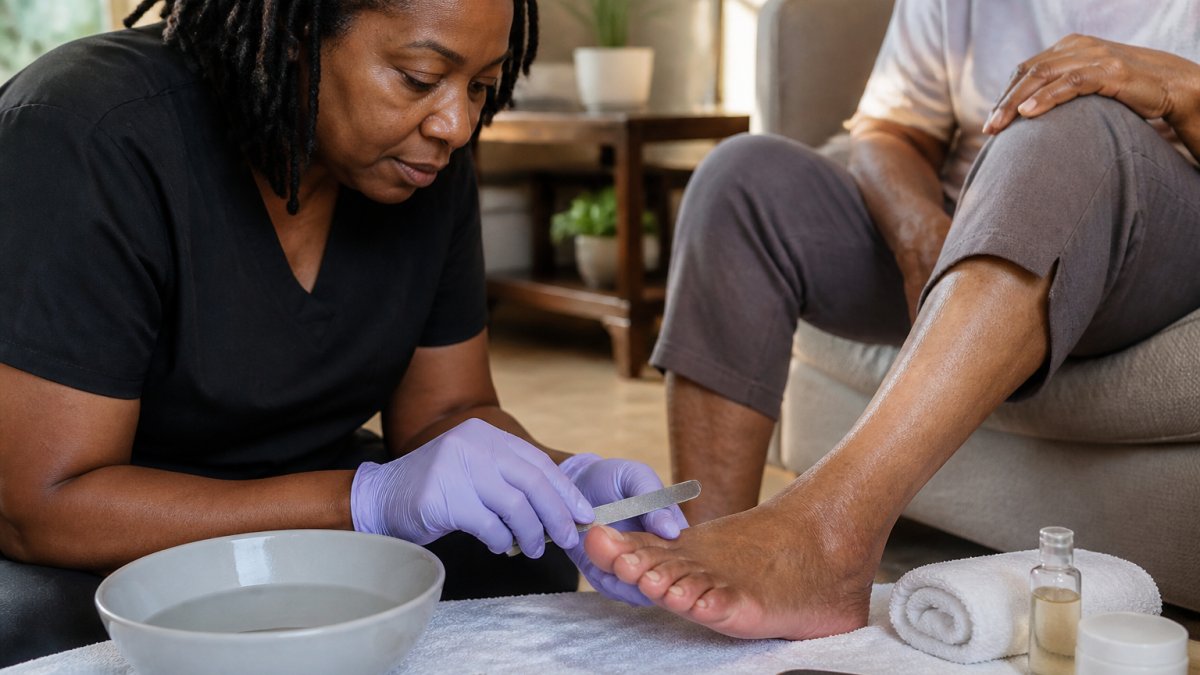
Professional in-home foot care is available for people who find travel difficult.
explores diabetic neuropathy in detail with daily foot check guidance directly relevant to recognizing symptoms.
Foot Care Nursing With Gellis provides in-home foot care, including specialized care for people with diabetes.
provides comprehensive guidance on at-home diabetic foot care management and professional support options.
emphasizes why regular assessments matter for people with diabetes.
Frequently Asked Questions
What are the early warning signs of diabetic foot problems?
If you are concerned about changes in your feet, consult a qualified healthcare professional.
Can diabetic foot problems start without pain?
Foot problems can occur without pain. If you are concerned about changes in your feet, consult a qualified healthcare professional.
How often should people with diabetes check their feet?
If you are concerned about changes in your feet, consult a qualified healthcare professional.
When should someone with diabetes seek urgent care for a foot problem?
If you are concerned about changes in your feet, consult a qualified healthcare professional.
Early signs of diabetic foot problems are your opportunity to prevent serious complications. Daily self-examination combined with professional care creates a strong defense. When you notice changes, numbness, tingling, skin changes, or slow-healing wounds, act quickly. Small problems caught early stay small. Ignored problems become emergencies. Book a diabetic foot care appointment and let our certified foot care nurse bring expert assessment and treatment to your home.


Comments