7 Signs Your Socks for Swollen Feet Need Replacing

Last Updated: November 4, 2026
Quick Summary
Replace socks for swollen feet every 3 to 6 months with daily wear, since elastic fibers fatigue with wear and washing and can lose compression even when the sock still feels snug. Replace sooner at the first sign of wear, such as a cuff that no longer snaps back after washing.
Stretch the cuff and release it monthly; a healthy sock snaps back fast.
Hand wash compression socks in cool water and air dry them flat.
Never put compression stockings in the dryer, as heat wears on elastic fibers.
Rotate several pairs so elastic fibers recover their shape between wears.
Label pairs by purchase date with a laundry marker on the inside cuff.
Table of Contents
Why Socks for Swollen Feet Wear Out Faster Than You Think
Compression socks for swollen feet are medical tools, not ordinary hosiery. They work by applying a pressure gradient: tightest at the ankle, looser up the calf. That gradient pushes fluid back toward the heart, which is why they help with edema and venous insufficiency.
But the same elastic fibers that create that pressure break down with every wear and wash. This is called fiber fatigue, and it is the single biggest reason a sock stops working long before it looks worn out.
A common pattern is that someone wears the same pair for a year, wonders why the swelling has crept back, and assumes their condition has gotten worse, when the sock itself may be the issue.
Mayo Clinic guidance on compression stockings notes that therapeutic benefit fades over time with regular use. The fabric still feels snug. The pressure is simply gone.
If you are already making common mistakes with swollen feet, our guide to sock mistakes that worsen swelling is worth reading before you buy another pair.
How Often to Replace Socks for Swollen Feet: A 3 to 6 Month Rule
The short answer: replace compression socks every 3 to 6 months with daily wear. That is the standard most foot care specialists follow, and it lines up with current clinical guidance on compression hosiery.
Why replace them regularly? Elastic fibers fatigue with wear and washing, which can reduce the compression a sock provides even when it still feels snug. Checking how your legs feel at the end of the day can be a useful signal.
Replacement Timelines by Sock Type
Sock Type | Replace Every | Why |
Compression socks | 3-6 months | Elastic fatigue kills the pressure gradient |
Diabetic socks | 3-6 months | Fit and seam integrity protect the skin |
Athletic socks | 3-6 months | High sweat and friction break down fibers |
Everyday socks | 6-12 months | Moderate wear, slower breakdown |
Dress socks | 1-2 years | Low-impact wear |
If your swelling is new, painful, or one-sided, get it checked. Our overview of swollen feet and ankles in older adults covers common causes and warning signs.
Signs Compression Socks Need Replacing
The clearest sign compression socks need replacing is a sock that no longer bounces back after washing. Stretch the cuff and release it. A healthy sock snaps back fast. A tired sock stays stretched, twisted, or misshapen.

The Stretch Test: A Two-Minute Monthly Check
Once a month, you can compare a worn pair against a new pair of the same model. Stretch both cuffs to the same width and release. A sock that returns to its shape quickly is generally in better condition than one that stays wider, ripples, or twists. A sock that fails this comparison may have lost some compression, even if it still feels snug.
Do the same test at the heel and toe: pinch the fabric and pull gently. Healthy knit springs back flat. Fabric that stays puckered or see-through has thinned at the pressure points where compression matters most.
Visual Inspection Guide: What to Look For
Check your socks in good light once a month. Replace any pair with:
Holes, tears, or runs, even small ones
Thinning fabric at the heel or toe, or fabric that looks translucent when held to a lamp
Damaged or frayed seams, especially along the cuff and toe closure
A cuff that leaves a deep mark but no longer holds shape
Socks that stay damp or smell musty after washing
Any pair that bunches, slides, or twists during wear
Elastic fibers visible as loose threads or a wavy, rippled surface
A sock that slides down can create uneven pressure, which may worsen discomfort, and a slipping cuff can be a sign the elastic has weakened.
When the Sock Is Fine but the Swelling Is Not
If a sock passes the stretch test and shows no visible wear but your legs still swell by afternoon, the problem may be fit, not lifespan. Re-measure your ankle and calf and compare against the sizing chart. A sock that was correct at purchase can become wrong after weight change, muscle loss, or a new medication. Our guide to swollen feet and ankles in older adults covers causes and warning signs worth reviewing before you blame the sock.
How to Wash Compression Socks to Extend Their Life
Washing compression socks by hand in cool water with mild soap and air drying them flat is generally recommended, as heat can wear on the elastic fibers.
A simple routine:
Rinse after each wear to remove sweat and oils.
Hand wash in cool water every one to two wears.
Skip fabric softener, which coats fibers and reduces stretch.
Roll, do not wring, to remove water.
Lay flat to dry away from direct heat.
If you use a machine, choose a gentle cycle in a mesh bag and cold water. Never put compression stockings in the dryer.
Rotation, Environment, and Other Factors That Affect Durability
Rotation is the durability trick most people miss. Elastic fibers recover their shape when given time between wears. Wearing the same pair day after day keeps those fibers stretched, and repeated stretching is what turns temporary snugness into permanent slack.
How Many Pairs Should You Own?
Some people find it helpful to rotate several pairs: one being worn, one resting, and one in the wash. Rotation gives elastic fibers time to recover between wears.
Label pairs by purchase date with a laundry marker on the inside cuff. When one pair fails the stretch test, you know its age and can judge whether the whole batch is nearing replacement.
Laundry and Heat: The Hidden Fiber Killers
Heat can affect elasticity, so hot water and tumble drying are generally avoided. A simple routine:
Rinse after each wear to remove sweat and oils.
Hand wash in cool water every one to two wears.
Skip fabric softener, which coats fibers and reduces stretch.
Roll, do not wring, to remove water.
Lay flat to dry away from direct heat.
If you use a machine, choose a gentle cycle in a mesh bag and cold water. Never put compression stockings in the dryer. Rinsing pool-worn socks promptly and using a mild soap is a reasonable precaution.
Storage and Daily Habits
Store socks away from radiators, direct sunlight, and humid bathrooms. Sun exposure and sustained heat can affect elastic over time. Rotate shoes and socks together: a tight shoe that rubs the heel accelerates fabric thinning at exactly the spot compression needs to hold.
A common mistake is judging replacement by calendar alone. Some people argue fixed intervals are arbitrary and prefer replacing only visible wear. In practice, a calendar reminder can help catch wear that is hard to see. Use both: replace at 3 to 6 months or at the first sign of wear, whichever comes first.
How to Find Licensed Foot Care Nurse Support for Swelling
Finding a licensed foot care nurse starts with verifying credentials. Look for a Registered Practical Nurse (RPN) or Registered Nurse (RN) with additional foot care training, and confirm their registration with the relevant provincial nursing regulator.
Ask three questions before booking:
Are you a licensed nurse, and what is your registration number?
What foot care training and certification do you hold?
How do you handle diabetic feet, circulation problems, or signs of infection?
A licensed nurse can assess swelling, check skin and nail health, and flag anything that needs a doctor. They cannot diagnose or treat vascular disease, so honest providers will refer you when something needs medical attention.
Our guide on how to find a licensed foot care nurse walks through the full checklist.
Book an In-Home Foot Care Assessment With Gellis
Swollen feet need more than a new pair of socks. They need someone who can look at the whole picture: the swelling, the skin, the nails, and the footwear.
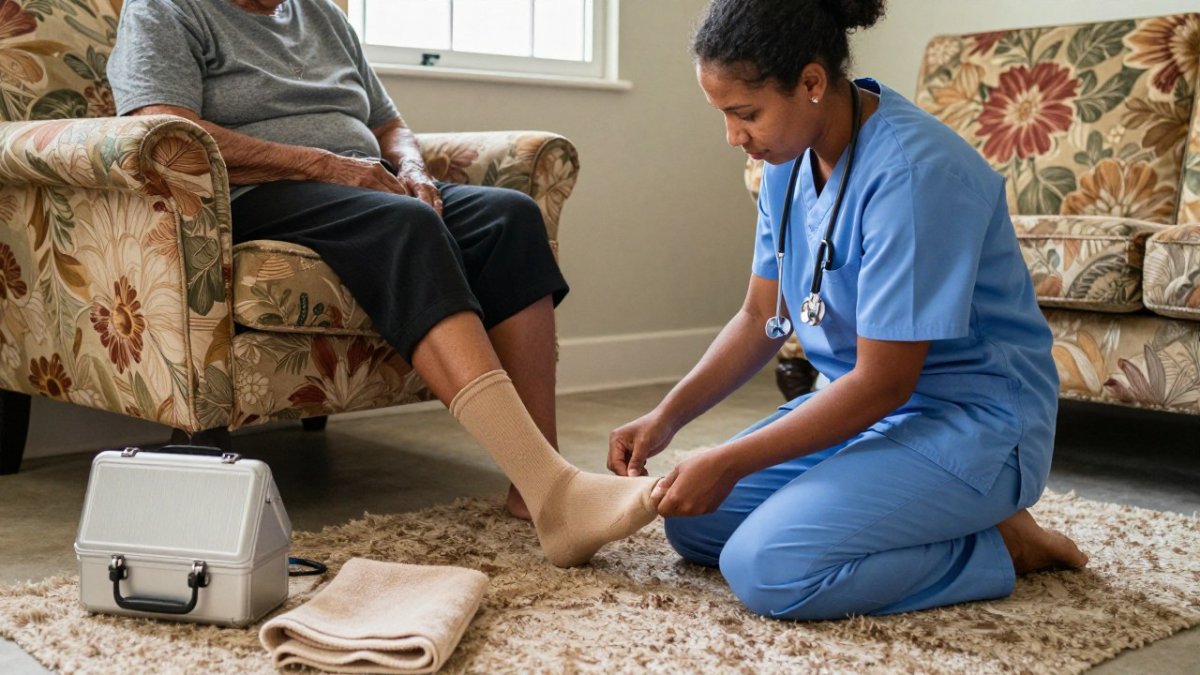
At Foot Care Nursing With Gellis, Gellis Jerome-Milandou is a licensed RPN and Foot Care Specialist who provides mobile foot care in the home, including specialized care for seniors and individuals with diabetes. Care at home can avoid travel to a clinic.
If you are ready to stop guessing, book an in-home foot care appointment and get a proper assessment.
Frequently Asked Questions
How do I know if my compression socks have lost their elasticity?
Stretch the sock gently and release it. A healthy compression sock snaps back into shape quickly. If it stays stretched, feels loose around the ankle, or twists after washing, the elastic fibers have fatigued. You may also notice the fabric looks thinner or the cuff leaves a lighter indentation than it used to. These are the same signs compression socks need replacing, regardless of how long you have owned them.
Can worn-out socks for swollen feet cause more swelling?
Yes. Compression socks are designed to deliver graduated pressure. As elastic fibers wear, the pressure they provide may decrease. Some people also find that a stretched cuff bunches or slides down, which can worsen discomfort. Checking socks regularly and replacing worn pairs can help them keep doing their job.
How many pairs of compression socks should I own?
A practical rotation is three to four pairs: one on your feet, one in the wash, and one or two ready to wear. Rotating pairs gives each sock time to recover its shape between wears and reduces the number of wash cycles per pair.
How should I wash compression socks to make them last longer?
Wash them by hand or on a gentle cycle in cool water with a mild detergent, then air dry flat away from direct heat. Avoid fabric softener, bleach, and tumble drying, because heat and softener coatings break down elastic fibers. Rinse thoroughly to remove detergent residue. Proper washing can help the sock keep its shape after laundering. Check the manufacturer's care label for specific instructions.
Swelling that keeps coming back is a signal worth acting on. Get a professional look at your feet, your footwear, and your compression routine. Get started with Foot Care Nursing With Gellis and walk in comfort again.


Comments