How to Choose Shoes for Diabetic Feet

Table of Contents
Last Updated: October 30, 2026
Learning how to choose shoes for diabetic feet is less about style and more about protection. A poor fit can rub, pinch or hide a small sore that turns serious, so the right shoe matters every day. A well-fitted shoe can help people keep walking with confidence. This guide explains how to choose shoes for diabetic feet, step by step, so you can shop with clear checks in hand.
Why Proper Footwear Matters When You Have Diabetes
Diabetes can reduce feeling in the feet, so a problem may go unnoticed until it becomes a wound. Protective footwear is one of the simplest ways to lower that risk.
A 2025 study on footwear used by people with diabetes recommends breathable uppers, room for foot deformities, and a flexible toe box (What Footwear Do People with Diabetes Mellitus Use). Those features are a useful starting point when you compare shoes.
Good footwear does three things:
Reduces pressure on sensitive spots
Limits rubbing and friction
Gives your feet room to change size during the day
How to Measure Both Feet for Diabetic Shoes
Your feet are rarely the same size. Measure both, and fit shoes to the larger foot.

Stand up with your weight on both feet.
Trace each foot on paper, keeping the pen upright.
Measure length from the heel to the longest toe.
Measure width across the widest part of the foot.
Use the larger measurement for both shoes.
Measure in the afternoon or evening, when feet are usually a little larger. This makes the fit more reliable.
How Should Diabetic Shoes Fit?
A diabetic shoe should feel secure in the heel and roomy in the toes. Your toes should move freely without touching the front of the shoe. Rather than relying on a quick feel, run through the same measurable checks each time you try on a pair. This turns a vague sense of comfort into a repeatable fitting protocol.
A Step-by-Step Fitting Protocol
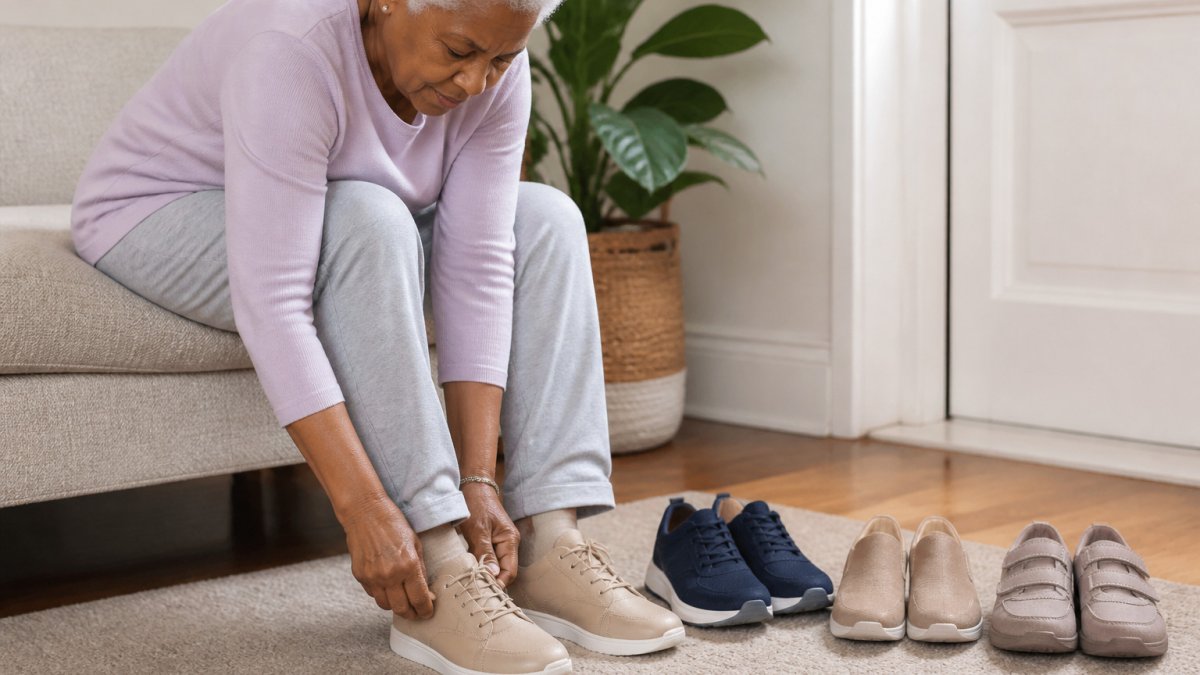
Try shoes on later in the day, when feet are usually at their largest, and wear the socks you plan to use daily. Then check each point below while standing and again while walking.
Toe clearance: Stand with weight on both feet. You should be able to press a thumb's width (roughly 1 to 1.5 cm) between the end of your longest toe and the front of the shoe. If you cannot, the shoe is too short.
Toe room: Wiggle your toes. They should move freely and not press against each other or the sides of the toe box.
Width: Feel along both sides of the foot. There should be no pinching or bulging over the sole edge. If the upper presses against the widest part of your foot, try a wider fitting.
Depth: Check that the top of the foot and toes are not pressed by the upper. You should be able to slide a finger across the top of the toes inside the shoe.
Heel hold: Walk a few steps. Your heel should stay seated without slipping up and down. A little lift is normal; a loose, sliding heel is not.
Standing and walking check: Stand and walk for several minutes on a hard surface, not just carpet. Note any pressure points, rubbing, or areas where the shoe feels tight.
Pro Tip Measure both feet and fit to the larger one. Feet are rarely identical, and fitting to the smaller foot is a common cause of toe pressure.
What to Do If the Fit Is Borderline
If a shoe passes some checks but fails others, do not assume it will stretch into shape. Uppers may soften slightly, but length, width, and depth do not change enough to fix a poor fit. Try a different size, width, or model instead. If you have reduced sensation, ask a clinician or pedorthist to assess the fit before you wear the shoes for full days.
Diabetic Footwear Features to Look For
Some features make a shoe safer for diabetic feet. Look for: (Source: guidelines from Diabetes Canada)
A roomy toe box that does not press the toes together
Soft, seamless lining that will not rub the skin
Closed toes and closed heels for protection
Adjustable laces or straps for a custom fit
Cushioning and good arch support
A firm heel counter for stability
Avoid open-toe styles, backless shoes and thin slippers for everyday wear. They leave the feet more exposed to injury.
Diabetic Shoes vs Regular Shoes: What Changes
Regular shoes are often made for style first. Diabetic shoes put protection and fit first.
Feature | Regular Shoes | Diabetic Shoes |
Toe box | Often narrow | Roomy |
Lining | Varies, can have seams | Soft and seamless |
Closures | Often fixed | Adjustable |
Depth | Standard | Extra depth for swelling |
Some people also need custom orthotics or prescription diabetic shoes. Ask your health care provider whether these are right for you.
Adjusting Your Choice for Neuropathy, Poor Circulation or Past Ulcers
If you have neuropathy, you may not feel a tight or rubbing shoe. Choose extra depth, a soft lining and frequent foot checks.
If you have poor circulation, prioritize a shoe that does not squeeze. Swelling is more likely, so leave extra room.
If you have had an ulcer before, be especially careful with pressure points. A shoe that worked before may need to be re-checked.
Checking Your Shoes and Feet During Daily Wear
Good shoes still need daily checks. Each day, look inside your shoes for rough spots, loose linings or pebbles. Check your feet for redness, blisters or cuts.
Use this simple routine:
Inspect the inside of each shoe before putting it on
Check both feet each evening
Replace shoes that no longer support or fit well
Booking a Foot Assessment for Safer Shoe Choices
If you are unsure which shoes suit your feet, a professional assessment can help. Foot Care Nursing With Gellis offers expert diabetic foot care for seniors and individuals with diabetes.
For a direct booking, use the diabetic foot care service page. If you prefer to stay home, our mobile foot care service brings care to your home.
Frequently Asked Questions
What should I look for in shoes if I have diabetes?
Look for closed-toe and closed-heel shoes with a roomy toe box, a soft and seamless lining, adequate depth, and adjustable closures such as laces or straps. Good support and cushioning help reduce pressure on vulnerable areas. Because the right fit depends on your foot shape, nerve sensation and circulation, ask a foot care professional to check your shoes before you rely on them for daily wear.
Are diabetic shoes different from regular shoes?
Diabetic shoes are typically designed with extra depth, wider or roomier toe boxes, softer linings, and fewer internal seams to reduce friction and pressure. Regular shoes are often built for style or general comfort and may squeeze the toes or rub the feet. Whether a prescription shoe or custom orthotic is medically appropriate depends on your foot health, so discuss this with your care provider.
How can I tell if my shoes are causing pressure or rubbing?
Check your feet daily for redness, blisters, calluses, or areas that stay red after you remove the shoe. Pay attention to the toes, heels and the sides of the feet where rubbing is most common. If a red area does not fade within about 30 minutes or any skin breaks, stop wearing that shoe and contact a health professional for advice.
How often should I check my feet after wearing new shoes?
Check your feet at the end of each day during the first few weeks of wearing new shoes, looking closely at the toes, heels and sides for redness, swelling, blisters or cuts. Wear new shoes for short periods at first and gradually increase the time. If you notice any skin damage or persistent discomfort, book an assessment with a qualified foot care professional.
Choosing the right shoe is one of the most practical steps you can take for diabetic foot health. Measure both feet, prioritize fit and protection, and check your shoes every day. When in doubt, speak with your health care team before you buy.

Comments