How to Choose Non-Slip Bathroom Flooring for Seniors

Last Updated: November 5, 2026
Quick Summary
The best non-slip bathroom flooring has enough texture to grip wet feet while staying easy to clean, and smooth, glossy surfaces should be avoided. Textured ceramic or porcelain tile and slip-resistant vinyl are common choices when installed correctly. Pairing the right floor with grab bars and a mat that grips the surface lowers fall risk for seniors.
Look for a slip-resistance rating or wet-surface test result from the manufacturer.
Avoid polished marble, high-gloss tile, and hardwood or laminate that absorbs water.
Choose a rubber or suction-backed mat that matches the specific floor surface.
Rinse mats after every shower, wash them weekly, and replace them when grip fades.
Install grab bars beside the toilet, tub and shower, and check them yearly.
Table of Contents
Bathroom floors cause more falls than most people realize, and for seniors the risk climbs with every wet step. Choosing the right non-slip bathroom flooring is one of the simplest ways to lower that risk at home.
A review of compliant flooring in older adults found that three studies showed statistical evidence that compliant flooring reduced fall-related injuries Compliant flooring to prevent fall-related injuries in older adults. The review did not report how large that reduction was, so treat it as a sign of direction rather than a precise figure.
Why Bathroom Floors Are a Fall Risk for Seniors
Bathrooms combine water, soap and hard surfaces. That mix turns an ordinary step into a slip.
Several factors make the problem worse for older adults:
Reduced balance and slower reaction time
Foot pain, numbness or poor circulation
Thick or ingrown toenails that change how the foot grips the floor
Foot health matters here more than many people expect. A foot that cannot feel the floor or flex properly gives the body less warning before it slips.
Best Non-Slip Flooring for Bathrooms
The best non-slip bathroom flooring has enough texture to grip wet feet but is still easy to clean. Smooth, glossy surfaces are the main thing to avoid.

Look for these qualities:
A slip-resistance rating or wet-surface test result from the manufacturer
Texture that stays rough after years of cleaning
Edges that are sealed so water does not seep underneath
Textured Tile and Vinyl Options
Textured ceramic or porcelain tile and slip-resistant vinyl are two common choices. Both can work well when the surface is textured and installed correctly.
A common mistake is choosing a tile that looks rough in the showroom but turns slick once soap residue builds up. Ask the installer how the surface will hold up to daily cleaning before you buy.
Surfaces to Avoid When Wet
Some flooring looks attractive but is risky in a bathroom:
Polished marble and high-gloss tile
Hardwood or laminate that absorbs water and swells
Smooth stone with no added grip
Non-Slip Bathroom Mats for Seniors: What Works and What Doesn't
Bath mats can help, but only if they are chosen with care. A mat that slides or bunches up creates a new hazard. The right mat depends on the surface underneath, the amount of water it will see, and who is using it.
Match the Mat to the Floor
The same mat behaves differently on tile, vinyl and painted concrete. A suction-cup mat needs a smooth, non-porous surface to seal; on textured tile the cups cannot grip and the mat slides.
Suction-cup mats: best on smooth acrylic or fiberglass tub and shower floors; check that every cup is pressed flat before each use.
Rubber-backed mats: best on smooth vinyl or sealed concrete; lift and rinse weekly so soap residue does not turn the backing slick.
Interlocking or drainage mats: useful in a walk-in shower because water passes through, but the edges must sit flush or they become a trip lip.
Watch out: a mat placed over a floor drain or a sloped shower floor can trap water and grow biofilm underneath, which is both a slip and an infection concern.
What Works
Mats with rubber or suction backing that grips the specific floor surface
Mats that lie flat with no curled corners; store them flat or hang them, never folded
Mats placed at the tub edge and by the sink, not in the middle of the room where they become a walking obstacle
What Doesn't
Thin fabric mats that slide on wet tile
Stacked or layered mats that create a lip to trip over
Mats that are never washed and collect soap film, hair and body oils
Maintenance That Keeps Grip
Grip fades before the mat looks worn. A common pattern is that the backing collects soap scum and skin cells, which act like a lubricant. Rinse the mat after every shower, wash it weekly, and replace it when the backing feels smooth or the suction cups no longer pop back into shape. In a shared bathroom, keep a spare mat so one can dry fully between uses.
When a Mat Is Not Enough
If the person uses a walker or transfers from a wheelchair, a loose mat is the wrong tool. A permanent slip-resistant treatment or textured flooring is safer because nothing can shift underfoot. Mats are a supplement, not a substitute for a grippy floor.
Tools and Techniques for Foot Hygiene Near the Bathroom Floor
Foot care is part of fall prevention. Keeping toenails trimmed and skin smooth helps seniors feel the floor and grip it better. The challenge most guides skip is mechanical: many older adults cannot safely reach their own feet, especially in a wet bathroom where balance is already compromised. This section covers the ergonomics and the tools that solve it.
Why Reaching the Feet Is the Hard Part
Bending forward from a standing position shifts the center of gravity and loads the lower back, hips and knees. For someone with stiff ankles, a replaced hip, neuropathy or limited trunk mobility, the movement is not just uncomfortable, it is a fall waiting to happen.
A common pattern is that seniors stop cleaning between the toes and under the nails because they cannot see or reach those areas. That is where fungal infections, ingrown nails and pressure damage start.
Tool-Assisted Foot Hygiene
Long-handled tools let the person stay seated and upright while the foot does the work.
Long-handled foot brush or sponge: a handle of roughly 40 to 60 cm lets the user scrub the sole and between the toes without bending; look for a textured grip that works with wet hands.
Suction or clamp-mounted pumice stone: attaches to the tub or shower floor so the user rubs the foot against it rather than holding it.
Long-handled toenail clippers or nippers: useful for thick nails, but they require steady hands; many people find a podiatrist or foot care nurse safer for this task.
Watch out: long-handled tools still require the user to lift and hold the foot. If hip or knee range of motion is limited, the tool alone will not solve the problem, a caregiver or a foot care professional may be needed.
Seated Setup That Reduces Risk
Use a sturdy stool with rubber feet, placed on a non-slip mat, not on bare wet tile.
Keep the tools within arm's reach before sitting down so the person does not stand up mid-task.
Wash feet before nail trimming, when nails are softer, but dry thoroughly afterward, especially between toes.
Caregiver Techniques in a Wet Bathroom
A caregiver helping with foot care faces the same slip risk as the person receiving care. A few habits reduce it:
Set up the space before the person sits: mat down, tools out, towel ready, water temperature checked.
Work from a seated position at eye level with the foot rather than bending over the person.
Use a plastic basin on a stable surface rather than filling the tub, so water stays contained.
If you see any sign of infection, spreading redness, warmth, pus or a new ulcer, contact a health professional. People with diabetes or reduced sensation should not wait for a routine appointment.
When to Bring In a Professional
Thick, curved or ingrown nails, corns and calluses are safer handled by a foot care nurse or podiatrist, especially for people on blood thinners or with diabetes. A home visit lets the assessment happen where the person actually walks and bathes, so the advice matches the real environment rather than a clinic floor.
Bathroom Flooring for Aging in Place
Many people want to stay in their homes as they age. Flooring is one of the first things to plan for.
Good aging-in-place choices include:
Continuous flooring with no thresholds or raised transitions
Slip-resistant surfaces in the tub, shower and toilet areas
Good lighting that shows the difference between floor surfaces
A common approach is to update flooring during a planned renovation rather than waiting for a fall. Planning early costs less and avoids rushed decisions.
Practical Steps to Prevent Falls in the Bathroom
Flooring is one part of the picture. These steps work alongside it: foot problems and fall risk are worth checking as part of the plan.
Install grab bars beside the toilet, tub and shower.
Use a non-slip mat or treatment inside the tub or shower.
Keep the floor dry and wipe up spills right away.
Check footwear for worn soles and a firm heel.
Trim toenails regularly and check feet for changes.
Review medications with a doctor or pharmacist if dizziness is a concern.
Step | Who it helps | How often |
Grab bars | Anyone with balance concerns | Installed once, checked yearly |
Non-slip mat | Tub and shower users | Washed weekly |
Foot checks | Seniors and caregivers | Daily |
Nail trimming | Seniors with thick nails | Every 2 to 4 weeks |
Booking a Home Foot Assessment Before You Renovate
Before choosing new flooring, it helps to know what the feet need. Foot problems such as corns, calluses, ingrown toenails or poor circulation can change which footwear and flooring are safest.
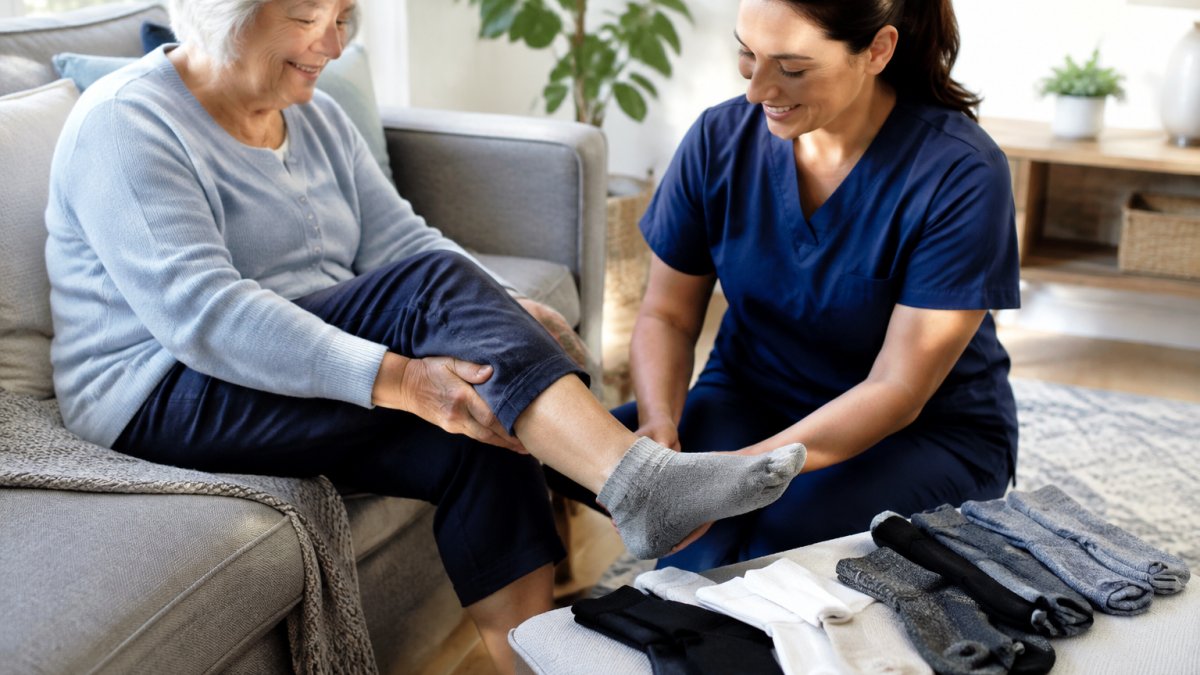
Foot Care Nursing With Gellis offers mobile in-home foot care for seniors and people with diabetes, so the assessment can happen where the person actually walks. You can book an appointment before making flooring decisions. Questions to ask a provider include how they assess circulation, what they check for infection risk and how they coordinate with family caregivers.
Foot Care Nursing With Gellis is led by a licensed RPN and Foot Care Specialist, so a visit can connect foot health with home safety planning.
Frequently Asked Questions
What is the safest flooring for a senior's bathroom?
Textured ceramic or porcelain tile with a high slip-resistance rating, or slip-resistant vinyl, are commonly recommended choices because they keep traction when wet. Look for a rating or manufacturer data on wet slip resistance rather than relying on appearance. Smooth polished tile, glossy vinyl and natural stone sealed to a high shine should be avoided. Pair any flooring choice with grab bars and good lighting. Because every bathroom is different, a home assessment from a qualified professional can help you decide what suits your mobility and foot health needs.
Are non-slip bathroom mats safe for seniors?
Non-slip bathroom mats can help when they have a suction or rubber backing that stays flat on the floor and the edges lie flat without curling. Loose mats, worn mats and mats that slide when stepped on can increase fall risk, so check them regularly and replace them when the backing wears out. Mats should not replace a safe floor surface. Choose a mat that is thick enough to be stable but thin enough that a walker or wheelchair can cross it easily.
How can I make an existing bathroom floor less slippery?
Anti-slip treatments and textured adhesive strips can improve traction on some existing floors, but results vary by surface and should be tested in a small area first. Keep the floor clean and dry, since soap residue and water are common causes of slips. Wipe up spills promptly and use a bath mat with a firm grip. If the floor is still slippery after these steps, speak with a contractor about replacing the surface.
Should a senior use a bath mat or non-slip flooring?
Non-slip flooring is the more reliable long-term choice because it does not move and does not need to be repositioned. A high-quality bath mat can serve as a short-term or supplementary measure. Many seniors use both: a grippy floor surface with a secured mat at the tub or shower exit. Foot health also matters. Anyone with diabetes or circulation concerns should check feet regularly for cuts or pressure areas, and speak with a qualified foot care professional about any concerns.
Choosing non-slip bathroom flooring for seniors is about reducing risk at every step. Start with the feet, then pick surfaces that grip, and back it up with simple habits and the right tools. If your loved one has foot problems or diabetes, a professional assessment is a sensible first step.


Comments